Stone deep cleaning is the full professional strip and clean of a natural stone surface to remove embedded soil, old wax, polish, failed sealers, grease and household residue. It is the correct first treatment for any tired-looking limestone hallway, dulled travertine bathroom, cloudy marble wall, greyed slate kitchen floor, or period ceramic hallway that has not been lifted properly in decades. We deep clean floors, walls, patios, fireplaces and worktops across London and the Home Counties using pH-balanced chemistry, professional water extraction and targeted spot treatment for specific stains.
Recent work
Real before and after
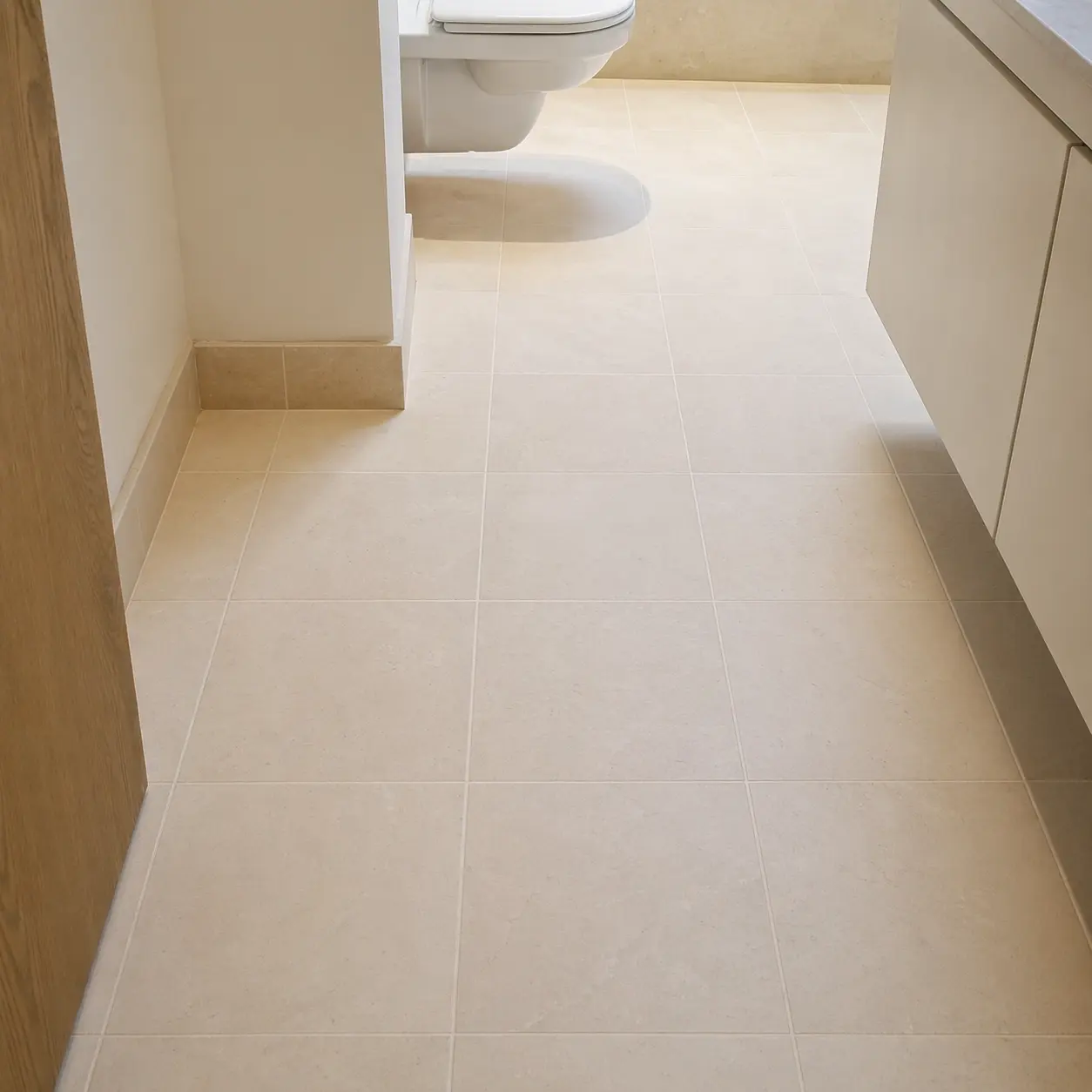
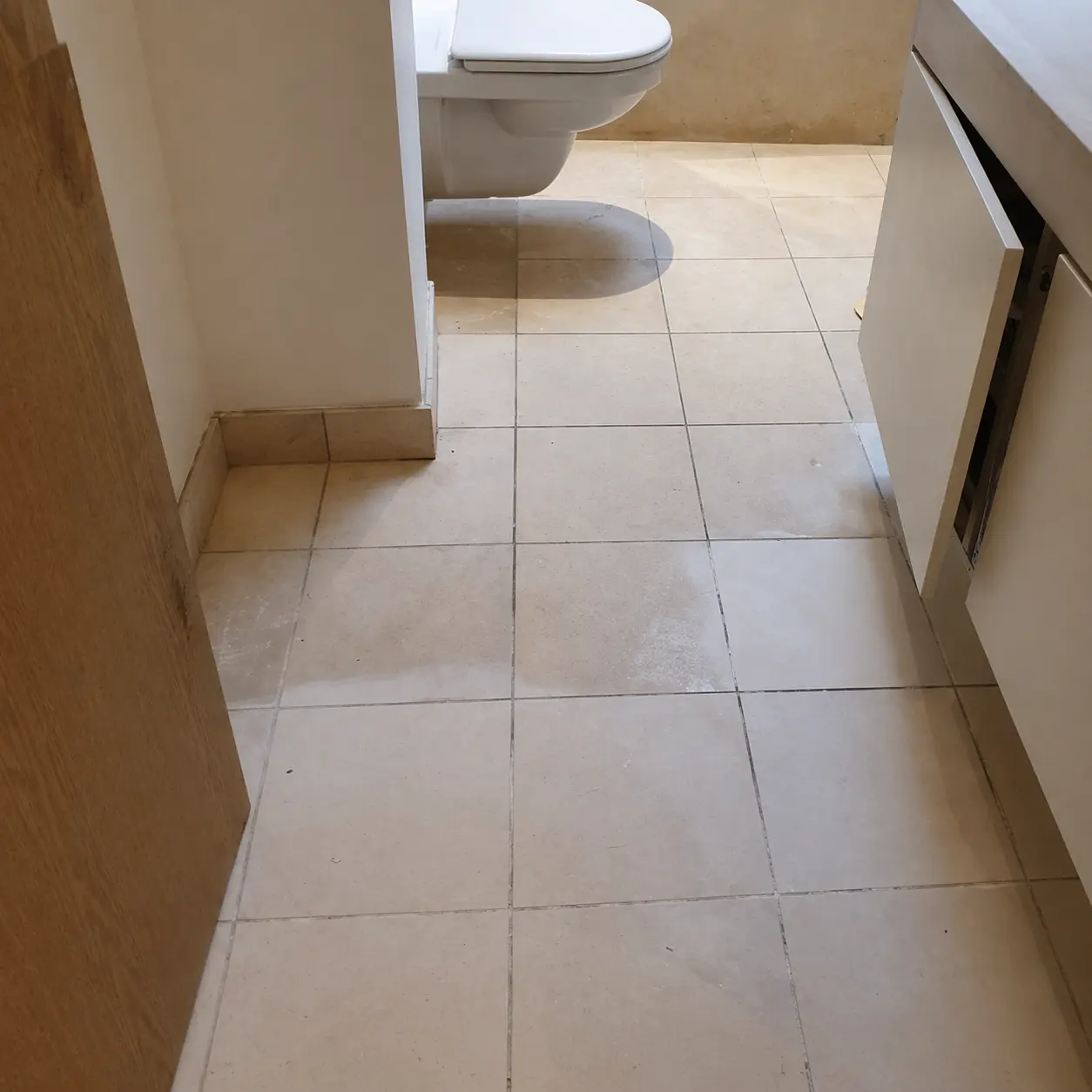
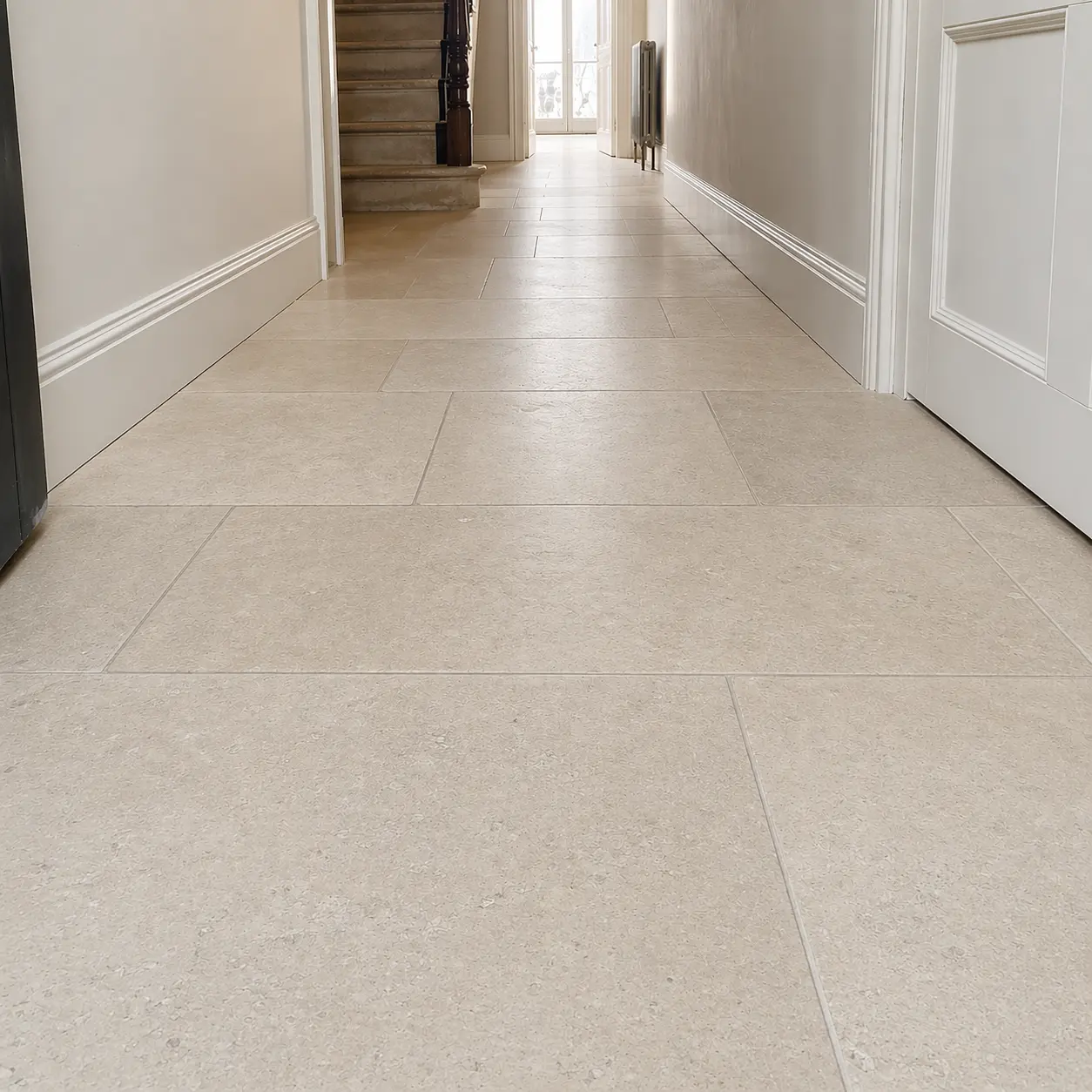
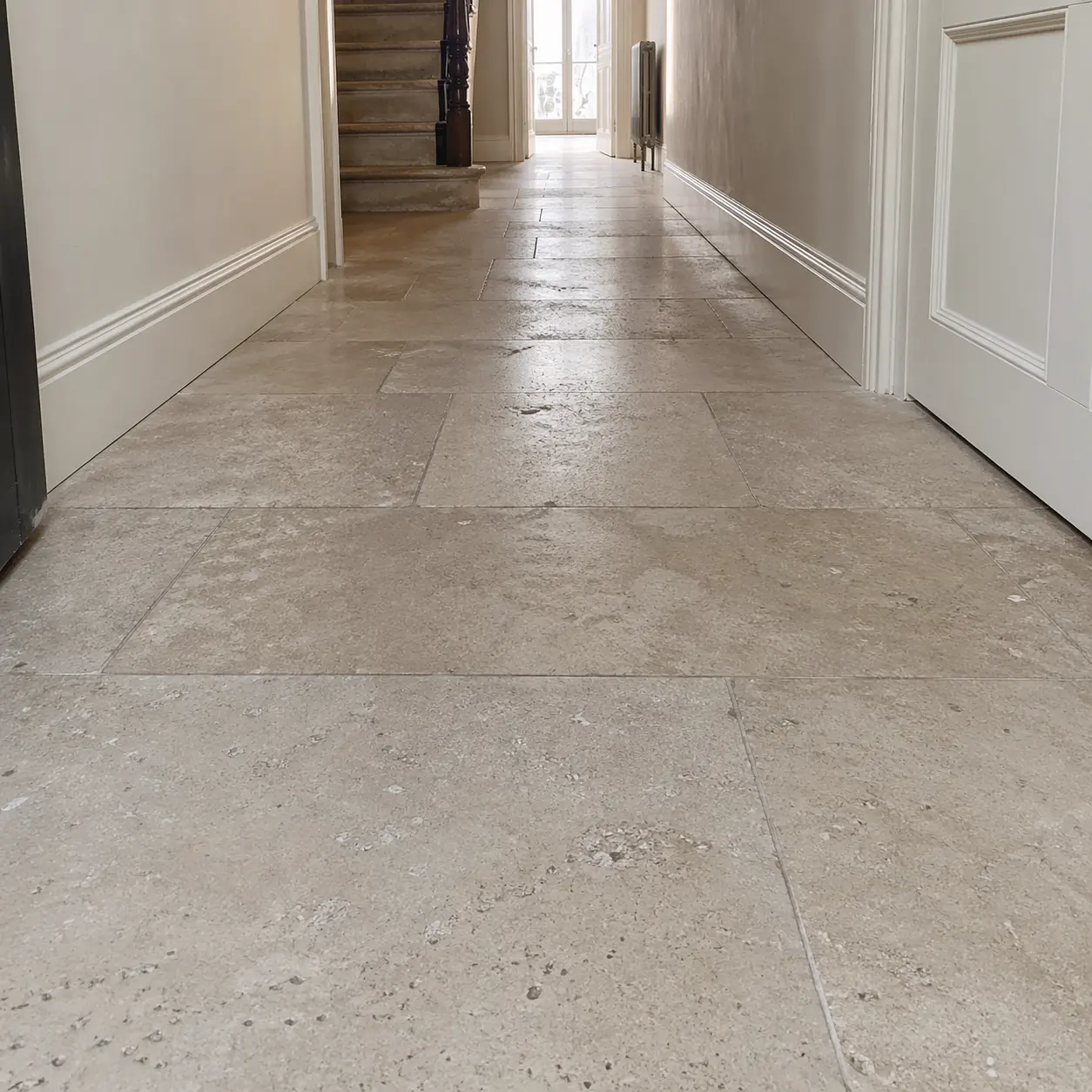
Why stone deep cleaning is needed
The single most common brief we receive on a period London floor is identical every time. The stone has been laid for anywhere from fifty to a hundred and fifty years. Somewhere between three and ten layers of domestic polish, wax, supermarket sealer, DIY linseed, household cleaner and embedded soil are sitting on top of the original surface. The tiles or stones are probably in good condition underneath, but nobody has seen them properly since the 1980s. Deep cleaning is the answer, and it is almost always the first stage of whatever other restoration work needs to follow.
Leaving a stone floor in that state has real consequences beyond appearance. A heavily waxed or polished floor is slippery when wet, making it a safety concern in hallways, kitchens and bathrooms. Embedded organic residue feeds mould and mildew in humid rooms, particularly on limestone and travertine bathroom floors and pool surrounds. Failed topical sealers look progressively worse as they yellow and peel unevenly, and they prevent any subsequent restoration from bonding correctly. And every year that a marble or limestone floor is cleaned with the wrong chemistry (particularly anything acidic) means the surface continues to etch and dull at a microscopic level. Deep cleaning is not cosmetic maintenance. It is the base stage that determines whether any further restoration is possible.
Signs your stone may need deep cleaning
- The floor looks "tired", yellowed or cloudy, even immediately after normal cleaning
- There is a visible sheen of wax or polish that catches light unevenly
- Grout lines between tiles are clearly darker than they used to be
- Patches of the floor look different to the rest (usually where older sealer has worn through unevenly)
- A limestone or travertine bathroom feels greasy or smells musty despite regular cleaning
- A slate kitchen or utility floor looks grey and matt rather than dark and rich
- Victorian or Edwardian tiles look flat and dusty rather than showing their original inlaid pattern
- You have just bought a period property and want to see what the original floor actually looks like
Suitable stone types and settings
We deep clean limestone (the classic London hallway and kitchen floor), travertine (bathroom floors, patios, pool surrounds, fireplaces), marble (hallways, reception floors, bathroom walls and shower surrounds), slate (kitchen floors, utility rooms, hearths, riven flagstones), sandstone (York stone paving, Purbeck, period flagstones), terrazzo (period Italian installations never properly lifted), Victorian and Edwardian ceramic tiles (period earthenware with decades of wax build-up) and modern porcelain (grout line discolouration is the typical failure point). Each stone needs a different alkaline concentration, a different dwell time and a different rinse sequence.
Critical rule: no acidic cleaners, ever, on marble, limestone, travertine or period ceramic. A shocking proportion of so-called professional stone cleaning in London still uses acid because it is fast. On calcium-based stone, acid etches the surface, dulls the finish and causes permanent damage. Our entire deep-clean process is alkaline or pH-neutral. On granite and porcelain, acid is less destructive but still unnecessary, so we do not use it on those either.
Results and expectations
Deep cleaning on its own restores around eighty per cent of visual condition on a tired-looking period stone floor. The colour returns, the original pattern reads correctly, the surface feels clean to the touch, and the stone looks like itself for the first time in years. The remaining twenty per cent usually requires honing, sealing and impregnation, or grout cleaning and re-grouting to finish the job properly. We do not commit to a full restoration quote on an unwashed floor, too much of the actual condition is hidden under residue to price honestly. Deep cleaning is where that becomes clear for both of us.
When to choose a full restoration instead
If your floor has visible lippage, deep scratches, missing pieces, broken tiles or significant etching, deep cleaning alone will not be enough. It will reveal the problem more clearly, but the fix is in one of the other services: grinding and lippage removal for uneven tiles, crack and chip repair for missing material, stain and etch removal for surface damage. On most projects, deep cleaning is stage one of a two or three stage restoration, and we plan the follow-on work at the site visit rather than after it.
Why choose us for stone deep cleaning
Deep cleaning looks simple and is not. The difference between a professional deep clean and a domestic one is the chemistry, the dwell time, the rinse sequence, and the extraction equipment. Leaving alkaline residue on the floor is worse than not cleaning at all. Using the wrong concentration on soft limestone can haze the surface permanently. Marius is on every deep-cleaning job across London and selects the chemistry on-site based on the water-droplet porosity test. We work calmly inside occupied homes, we move and protect furniture without damage, and we leave the property cleaner than we found it in every respect, not just the stone. We are fully insured for residential, heritage and commercial work, with documentation on request before mobilisation.
Areas we cover
We deep clean natural stone across London, including Mayfair, Kensington, Chelsea, Notting Hill, Holland Park, Belgravia, Hampstead, St John's Wood, Marylebone, Islington, Primrose Hill, Bloomsbury and the wider centre and north of the city, plus selected projects in the Home Counties. See areas we cover for the full list.
Pricing
Quoted after a site visit
Every quote is bespoke. We come out for a free 15-minute site visit, look at the stone, agree the finish with you in person, and send a written quote — usually the same day.
How we work
A careful, transparent process
- 01
Site assessment and porosity test
We identify the stone, check absorbency and existing surface treatments, and agree the scope and the right chemistry before any solution goes on the floor.
- 02
Pre-clean vacuum and masking
Loose soil removed, skirtings and adjacent finishes masked, drainage lines taped, wet-vacuum set up.
- 03
Alkaline deep clean
Professional alkaline pre-treatment breaks the bond between the stone and the layered residue. Dwell time is measured, not guessed.
- 04
Mechanical agitation
Rotary brush or soft diamond pad run across the full area, lifting the softened residue into suspension.
- 05
Rinse and extraction
Water-extraction machinery lifts the dirty solution off the stone so the contamination does not re-settle.
- 06
Targeted spot treatment
Embedded rust, oil, tannin and mould spots treated individually with the correct poultice before drying.
- 07
Full dry and inspection
Floor allowed to dry to proper moisture reading before any sealing, honing or further work proceeds.
- 08
Optional sealing or honing
Deep cleaning is usually the first stage of a larger restoration. We book follow-on work as a single visit or a return visit depending on condition.
Common questions
Frequently asked
-
How long does stone deep cleaning take?
Most stone deep cleaning projects are completed in one to two working days. A single bathroom or small hallway is usually half a day. A full ground-floor period property clean is typically one and a half to two full days. Drying time is a separate window of 24 to 48 hours before any sealing or follow-on work can proceed. We give you the exact programme in writing at the site visit so you can plan around access and drying time.
-
How much does stone deep cleaning cost in London?
Prices start at £45 per square metre with a minimum project value of £600. A typical London hallway deep clean is £600 to £900. A full ground-floor period limestone or travertine clean is usually £1,500 to £3,500 depending on the area, stone type and how much layered wax and sealer has to come off. Every quote is given in writing after a site visit, with drying time and optional follow-on sealing priced separately.
-
Is deep cleaning safe for all stone types?
Yes, when the right chemistry is selected. We deep clean marble, limestone, travertine, slate, sandstone, terrazzo, Victorian and Edwardian tiles, and modern porcelain. Each requires a different alkaline concentration and dwell time. Critically, we never use acidic cleaners on calcium-based stones (marble, limestone, travertine, period ceramic) because acid permanently damages those surfaces. Every job starts with stone identification and a porosity test so the chemistry is correct before anything touches the floor.
-
Will deep cleaning create mess or disruption?
Deep cleaning is wet work rather than dusty work. The main practical impact is that the floor is out of use during the wet cleaning, rinsing and drying cycle, which typically spans 24 to 48 hours. We use water-extraction equipment to lift dirty solution off the floor cleanly rather than leaving it to evaporate. Skirtings and adjacent finishes are fully masked and protected. You can usually remain in the house, though access through the work area may be limited during active cleaning.
-
Will deep cleaning remove all the stains and discolouration?
It removes most of it, not all. Deep cleaning typically restores around eighty per cent of visual condition on a tired-looking period stone floor. Surface wax, polish, failed sealers and embedded soil come off completely. Deep-set rust, oil or tannin stains may lift partially and need targeted stain treatment as a separate stage. Any remaining dulness, etch marks or wear is a stone restoration question, not a cleaning one. We tell you honestly at the site visit which parts are a cleaning job and which are not.
-
Should I seal the stone after deep cleaning?
Yes, almost always. Deep cleaning opens the pore structure of the stone and removes any residual old sealer. Without a fresh impregnator, the stone is more vulnerable to new staining than it was before cleaning. We typically quote deep cleaning and sealing as a combined project unless the stone also needs honing or polishing first. The sealer we specify depends on the stone type and is explained in writing at the quote stage.
Ready to talk?
Send us a photo of your stone deep cleaning
WhatsApp or upload a picture. You'll receive a thoughtful response within one working day and we'll only book a site visit if it's genuinely needed.
Prefer the phone? Call the specialist