Stone sealing and impregnation is the specification and application of the correct impregnating sealer for a natural stone surface. Done correctly, it protects against staining, moisture ingress and everyday contamination for years, without changing how the stone looks. It is the essential final stage of any restoration on marble, limestone, travertine, terrazzo or sandstone, and a routine maintenance service on worktops and bathroom floors. We seal floors, walls, worktops, patios, hearths and wet areas across London and the Home Counties.
Recent work
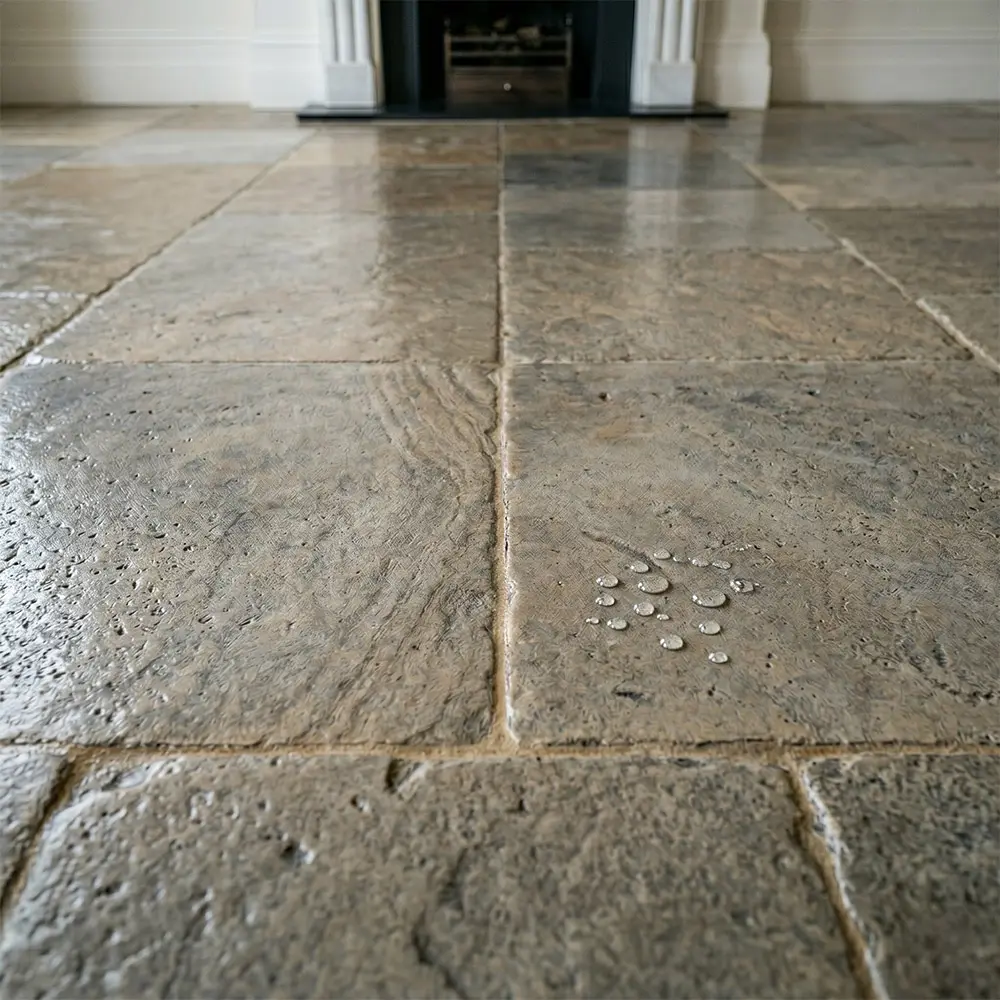
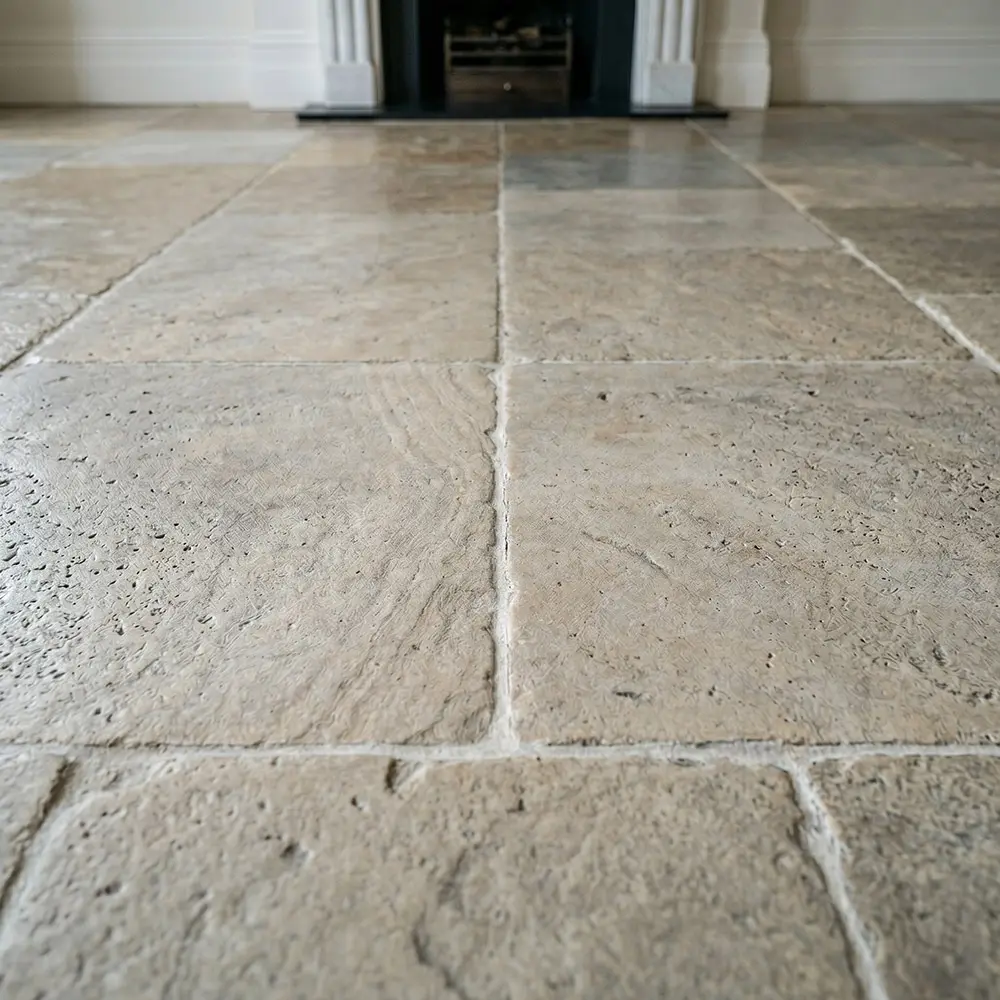
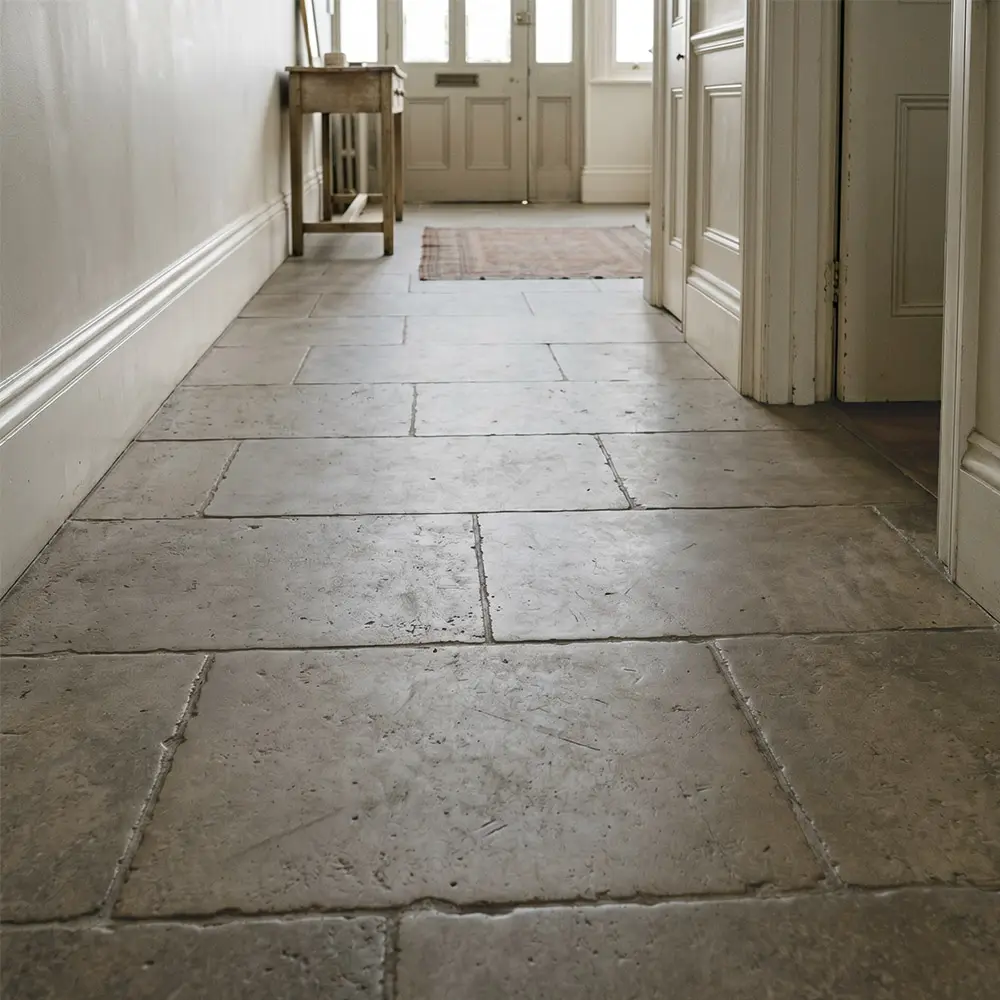
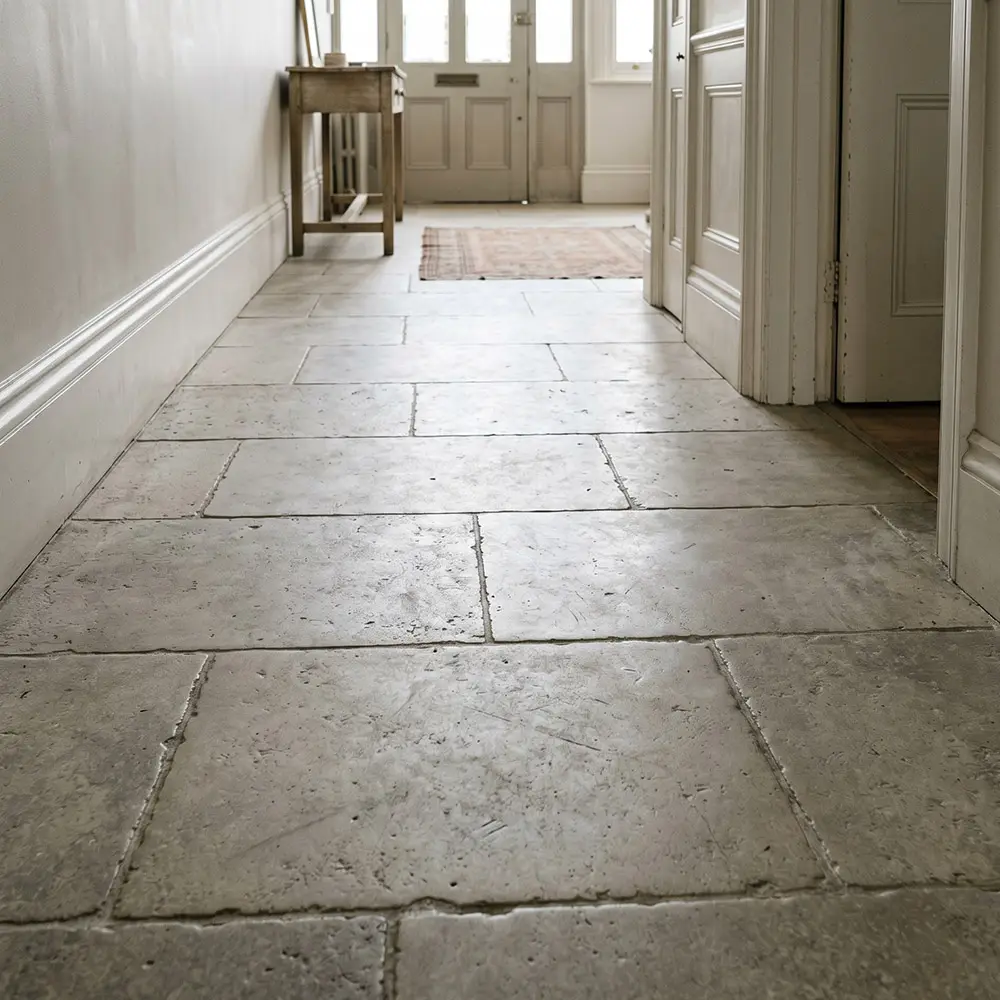
Real before and after
Why stone sealing is needed
Natural stone is porous. To varying degrees and at varying rates, every stone we work with absorbs moisture, oil and dissolved contamination from whatever sits on its surface. Marble will absorb a red wine spill in minutes. Limestone is even more absorbent and will pull in shampoo, cosmetics, olive oil or tannins over a few seconds. Travertine has the added complication of natural voids that trap dirt and moisture. Terrazzo behaves like the aggregate it is made from, usually calcium-rich and absorbent. Granite is the least porous but is still vulnerable to dark oils and specific acids. In every case, unsealed stone stains.
Sealing is the only preventive answer. A correctly specified impregnating sealer lines the pore structure of the stone from within, so that moisture and oil sit on the surface long enough to be wiped away rather than being absorbed. It does not form a film. It does not change the look. It does not peel or craze. When it is time to re-seal (every 18 to 36 months in typical residential use, depending on the stone), the product tops up rather than needing to be stripped off. Unsealed or poorly-sealed stone, by contrast, is where nearly all the staining problems we see on London floors and worktops originate.
Signs your stone may need sealing
- Water beads poorly or disappears into the stone within a few seconds of a droplet test
- Oil, wine, cosmetic or coffee marks have left visible stains that cleaning will not lift
- A limestone or travertine floor has darkened in specific patches where liquid has sat
- A marble or granite worktop shows colour changes around the sink, hob or tap area
- It has been more than two years since the stone was last sealed
- The floor has just been restored (honed, polished or deep cleaned) and the freshly opened surface needs protection
- You have just bought the property and do not know when the stone was last sealed
- A previous sealer looks cloudy, patchy, peeling or yellowing (that is a topical sealer failing, not an impregnator, and it needs stripping before re-sealing)
Suitable stone types and settings
We seal marble (bathroom floors and walls where shampoo, perfume and cosmetics create staining risk, and marble kitchen worktops), limestone (the most sealer-hungry stone we work with, French Moleanos and Portland especially, needing re-seal every 18 to 30 months), travertine (patios and pool surrounds against frost and algae, internal bathroom travertine against soap and shampoo), granite (darker granites benefit significantly, lighter granites usually do not need sealing), terrazzo (period Italian terrazzo absolutely needs sealing after any restoration), slate (riven slate kitchen worktops and period slate hearths), sandstone (York stone and Purbeck paving against weather and organic staining) and period Victorian and Edwardian tiles (breathable impregnator only, never a topical, period earthenware must keep releasing moisture).
There are two kinds of sealer and they are nearly opposites. Topical sealers sit on top of the stone as a film, give a "wet-look" gloss, and peel off unevenly. We almost never use them. Impregnating sealers sink into the stone itself and line the capillaries from within. That is what we specify, on almost every stone, almost every job.
Results and expectations
A correctly sealed floor or worktop looks identical to the day it was laid, but with a meaningful protective margin against staining. Water and oil bead on the surface and can be wiped away before absorption begins. Day-to-day cleaning is easier because dirt has less to grip onto. In residential use, a properly applied impregnator lasts 18 to 36 months on limestone, 24 to 48 months on marble, 36 to 60 months on granite and travertine, and indefinitely on quartzite in worktop use (though we still recommend a check at the three-year mark). Sealer is not a permanent state and will gradually wear through in traffic paths and around sinks, which is why re-sealing is part of the ownership cycle rather than a one-off event.
When sealing is not enough on its own
If your stone already has visible staining, sealing will not remove it. Existing stains need stain and etch removal first, then sealing. Similarly, if the stone is dull, etched or worn, sealing will protect it in its current state, not restore it. Those cases need polishing, honing or deep cleaning first, with sealing as the final stage. Sealing is never the first step in a restoration. It is always the last.
Why choose us for stone sealing
Sealer choice is where most professional stone maintenance in London goes wrong. Generic "stone sealer" off a merchant shelf is almost never the right specification. A Calacatta marble bathroom wall does not need the same product as a Jerusalem limestone hallway, which does not need the same product as a sandstone patio. The porosity test we run at the start of every job tells us which one to use, at what concentration, and for how many coats. Marius is on every sealing visit, we never seal over dirt, old wax, failed previous sealer or damp stone, and every sealer choice comes with a written note explaining why that specific product was used. We are fully insured for residential, heritage and commercial work, with documentation on request.
Areas we cover
We seal natural stone across central and north London, including Mayfair, Kensington, Chelsea, Holland Park, Notting Hill, Belgravia, Hampstead, St John's Wood, Marylebone, Primrose Hill, Islington and Bloomsbury, plus selected projects in the Home Counties. See areas we cover for the full list.
Pricing
Quoted after a site visit
Every quote is bespoke. We come out for a free 15-minute site visit, look at the stone, agree the finish with you in person, and send a written quote — usually the same day.
How we work
A careful, transparent process
- 01
Stone identification and porosity test
A controlled water-droplet test on clean stone tells us exactly how absorbent the surface is and therefore which sealer, at what concentration, is correct.
- 02
Full deep clean
Impregnators bond poorly to dirt, wax or previous sealer. Every sealing job starts with a professional alkaline deep clean.
- 03
Proper dry time
Applied to damp stone, sealer clouds or fails. We check moisture content with a meter, not a thumb.
- 04
Test patch
First coat tested in a small area and signed off by you before the full floor is committed.
- 05
Sealer application
Impregnating sealer, never a topical coating, applied in the correct number of coats for the stone type and use.
- 06
Residue removal
Any surface residue buffed off before it cures, leaving a clean, natural-looking surface.
- 07
Written aftercare
The exact sealer used, coat count, re-seal cadence, cleaners to avoid, and what early failure looks like, all handed over on paper.
Common questions
Frequently asked
-
How long does stone sealing take?
A standalone sealing project is usually completed in one working day. A full-house seal with a prior deep clean is typically one and a half to two days. Worktop sealing is often a half-day visit. The only hard constraint is drying time, both before applying the sealer (the stone must be properly dry after cleaning) and after the final coat (24 to 48 hours before the floor returns to normal use). We confirm the programme in writing at the site visit.
-
How much does stone sealing cost in London?
Sealing starts at £25 per square metre with a minimum project value of £450. A typical London bathroom seal is £450 to £650. A full ground-floor limestone seal is £1,200 to £2,500 depending on area and prior preparation. Worktop sealing sits around £450 per worktop run. Where deep cleaning is required first, that is a separate line item. Every quote is given in writing after a site visit, with the exact sealer specified.
-
Which stones actually need sealing?
Marble, limestone, travertine, terrazzo, slate, sandstone and Victorian or Edwardian ceramic tiles all benefit significantly from sealing. Granite is the only common stone where sealing is often not needed, and even then darker granites and high-use kitchen worktops benefit. Modern fully-vitrified porcelain does not need sealing at all (the tile itself is effectively non-porous), but cement-based grout between porcelain tiles usually does. We run a porosity test at the site visit to decide precisely.
-
Will sealing change the appearance of my stone?
No, not if the correct product is used. We apply impregnating sealers that sink into the pore structure of the stone and protect from within, without forming a film on the surface. The stone looks identical to the day before sealing, just with a proper moisture and stain barrier underneath. The sealers that darken or gloss up stone (topical sealers and enhancing sealers) are a different product category. We almost never use those, and never without explicit discussion and a test patch first.
-
How long does a fresh sealer last?
In normal residential use, sealer life depends on the stone type and the setting. Limestone typically needs re-sealing every 18 to 30 months. Marble is usually 24 to 48 months. Travertine and granite can run 36 to 60 months between re-seals. Heavy-traffic commercial floors and busy kitchen worktops are always at the lower end of those ranges. We hand over a written re-seal schedule at the end of every sealing project so you know when to think about it again.
-
Can I seal the stone myself with a product from a builder's merchant?
Honestly, you can, but the results are rarely comparable to professional sealing. Generic stone sealer off a shelf is a single product trying to work on many stones, and is almost never the right specification for a particular Carrara bathroom, a French limestone hallway, or a Jerusalem stone kitchen. The chemistry, the concentration and the coat count matter. A badly applied sealer that clouds or peels is also expensive to strip off afterwards. We do not advise DIY on premium stone installations.
Ready to talk?
Send us a photo of your stone sealing and impregnation
WhatsApp or upload a picture. You'll receive a thoughtful response within one working day and we'll only book a site visit if it's genuinely needed.
Prefer the phone? Call the specialist