Stone polishing is the mechanical restoration of shine, clarity and light reflection on natural stone surfaces. It is the correct treatment for marble that has lost its lustre, limestone that looks tired in the light, granite worktops with a dull halo around the sink, terrazzo that has gone matt with age, and onyx feature walls that no longer read their own pattern. We polish floors, worktops, hallways, staircases, reception rooms and bathroom surfaces across London and the Home Counties, specifying the correct finish level and diamond sequence for each stone.
Recent work
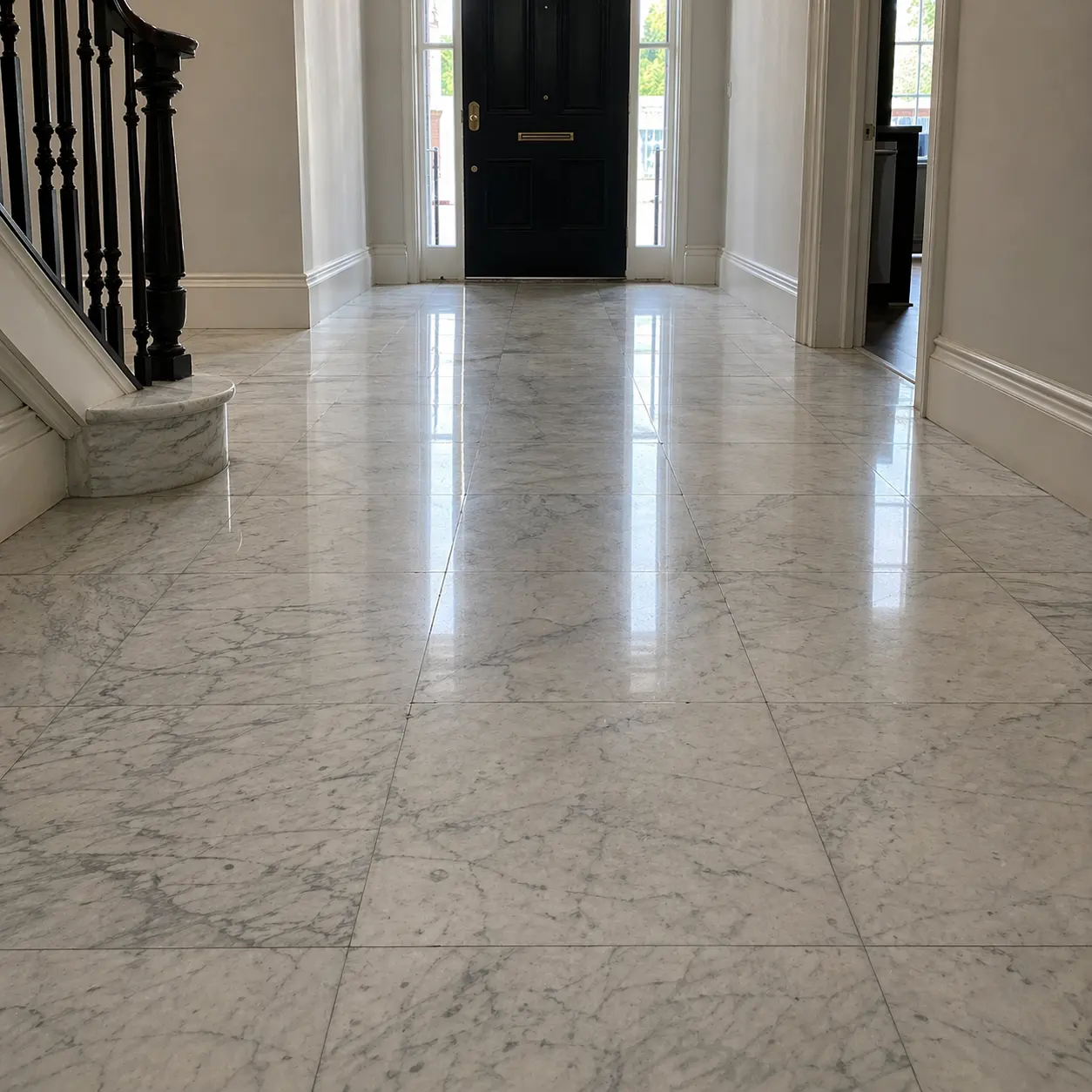
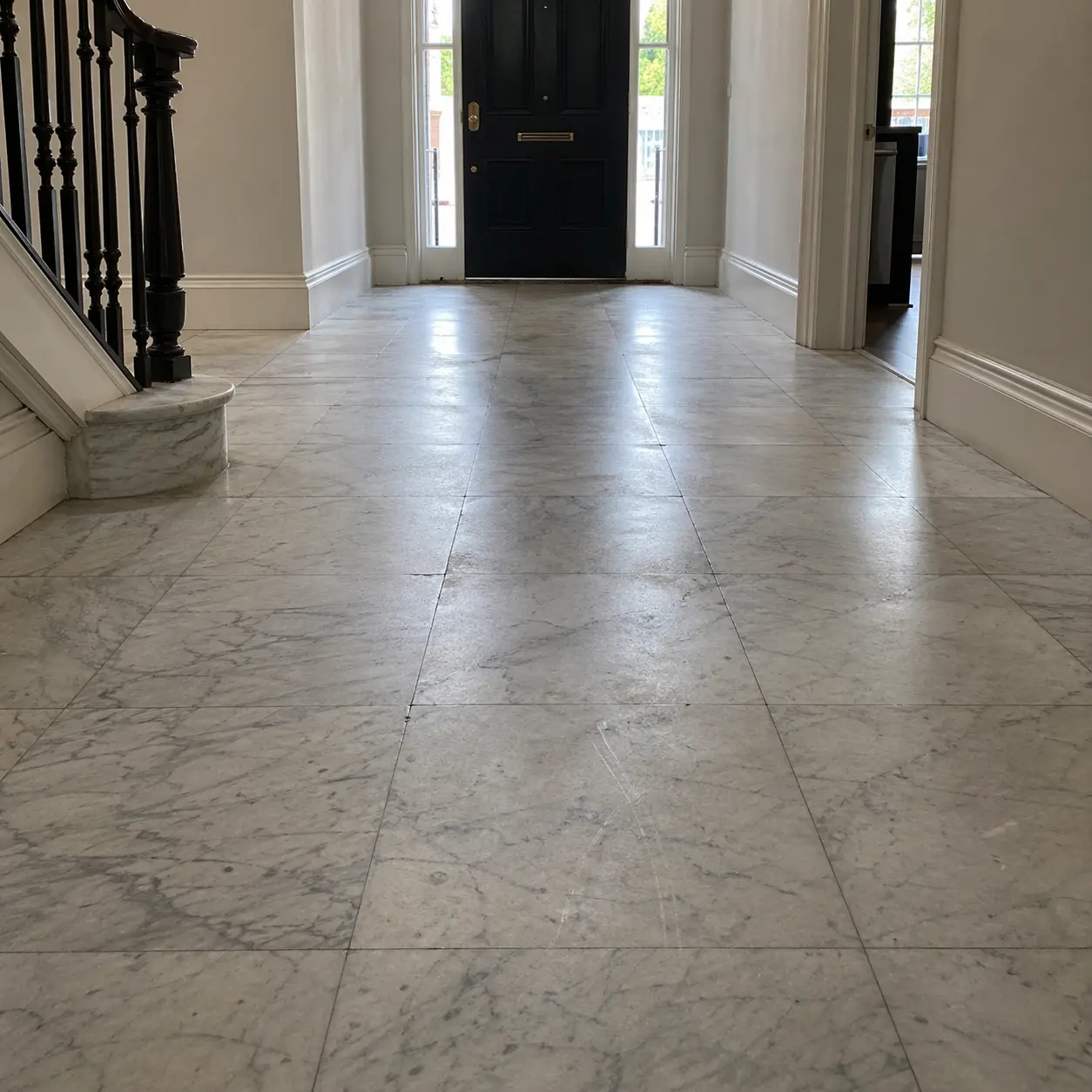
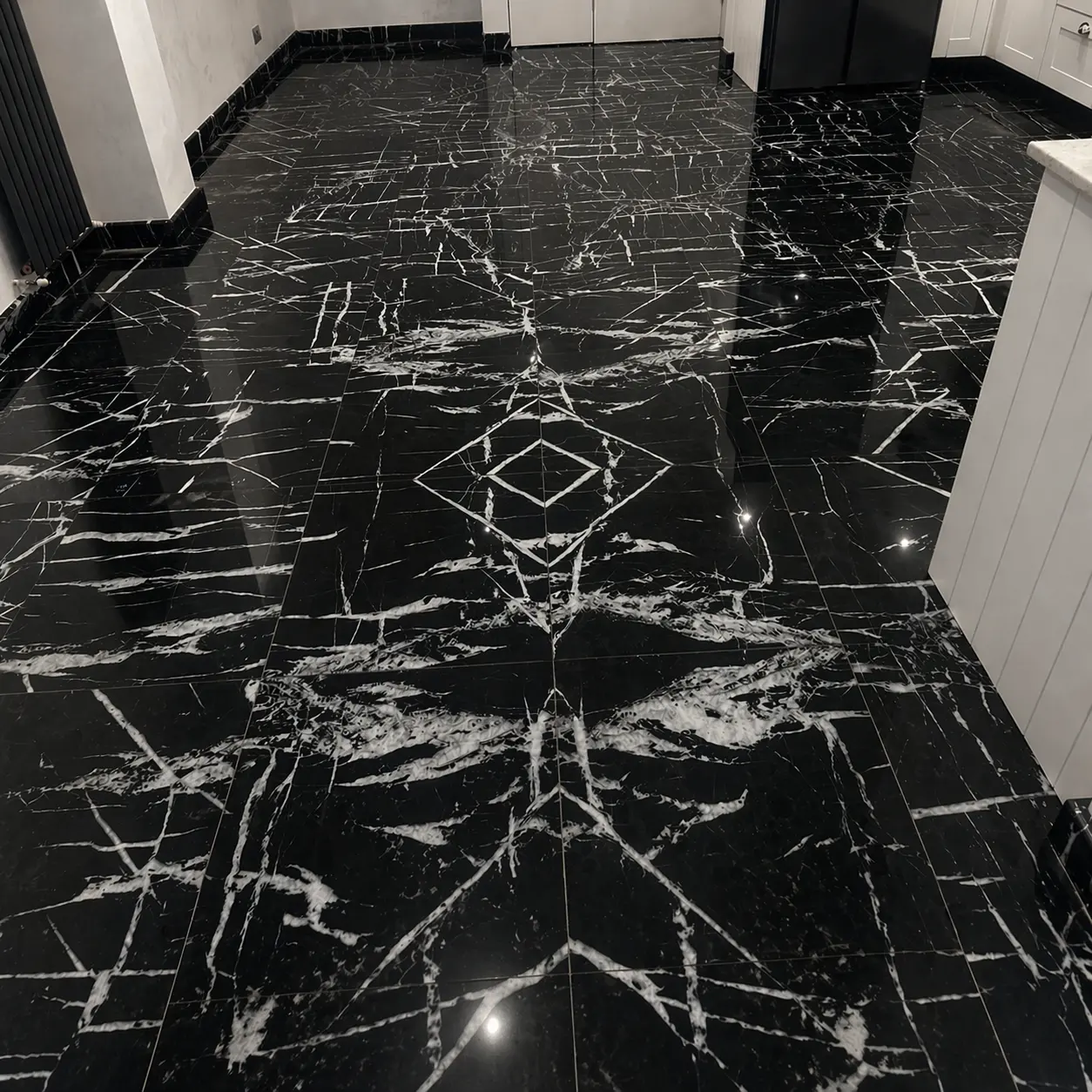
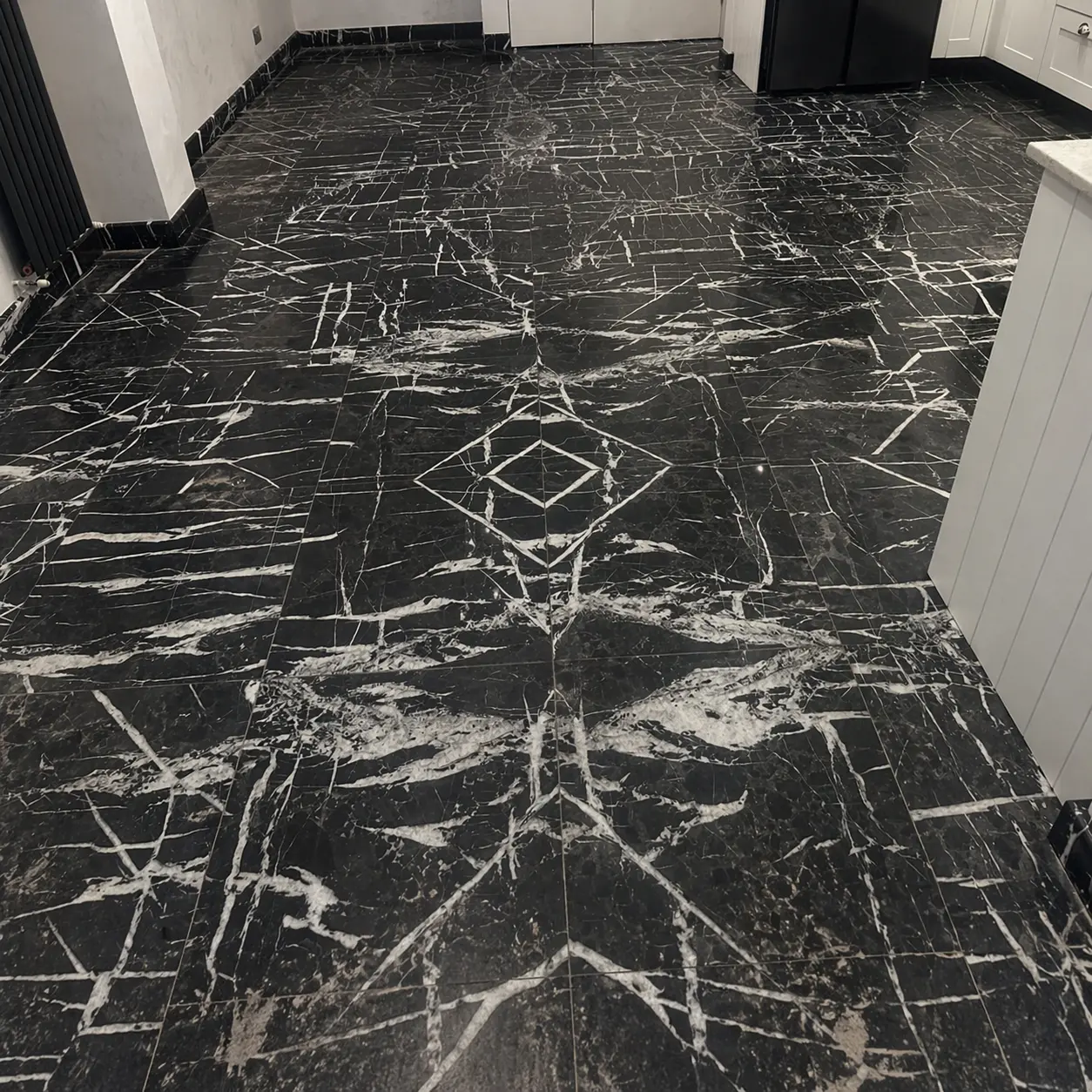
Real before and after
Why stone polishing is needed
Natural stone does not wear out quickly, but it does lose its surface over time, and the loss is almost always the same mechanism. Foot traffic, grit carried in from outside, cleaning chemicals sitting too long on the surface, acidic spills from kitchen worktops, and occasional scrubbing with the wrong pad all combine to abrade the top fraction of a millimetre of the stone. The effect reads as a dull haze, a patchy appearance in raking light, a lost reflection around the most-used parts of the floor, or a worktop that used to gleam and now looks flat. Marble shows it first, limestone second, terrazzo and granite later but eventually.
Leaving a polished stone to continue dulling is not a safety issue, but it does have consequences. The micro-roughness that causes the loss of shine also traps more dirt than the original surface, which makes the floor harder to clean and more prone to staining. Older wax or polish applied by previous owners compounds the problem by sitting as a film on top, yellowing with age, and making the dullness worse. The further that layering goes, the more heavy-handed the eventual restoration becomes. A floor caught early needs a light re-polish. A floor left for twenty years needs stripping, honing and re-polishing from scratch.
Signs your stone may need polishing
- The floor or worktop reads flat or hazy in raking daylight, particularly in hallways and reception rooms
- Reflections are no longer crisp, or parts of the floor reflect well while others do not
- There is a clear difference between foot-traffic paths and the stone under furniture
- Marble kitchen worktops show a dulled ring around the sink or hob
- Cleaning the floor no longer restores its appearance, however carefully you work
- Water marks, glass rings or fingerprints stay visible on a dry, clean surface
- The stone feels rougher underfoot or under the hand than it used to
- There is a visible build-up of old wax, polish or supermarket sealer that has gone cloudy or yellow
Suitable stone types and settings
We polish marble (Carrara, Calacatta, Statuario, Crema Marfil and British fossil marbles), limestone (French Moleanos and Buxy, Jerusalem Gold, Portland, Bath stone), terrazzo (Venetian period installations, epoxy-set modern, agglomerate), granite in its many varieties, onyx feature walls and bar tops, plus engineered stone composites where polishing is appropriate. Each stone has a different correct grit sequence and a different final finish level. Marble will take a full mirror if that is what the client wants. Limestone tends to look better at a soft satin. Terrazzo needs careful lippage correction before polishing so the aggregate sits flush with the matrix. Granite demands specific diamond fines above the grit range that works on marble.
Polishing is appropriate in private residences, hotels, listed buildings, conservation-area properties, premium retail and hospitality, and occasionally in commercial offices where a stone lobby is a brand touchpoint. It is not the right answer for riven slate, honed textured limestone, or any installation where the original specification was deliberately matt. On those surfaces, please see honing instead.
Results and expectations
A properly polished floor restores the original finish level of the stone in every sense a non-specialist can see. Reflection returns, colour reads correctly again, and the material looks like itself. Two honest caveats. First, polishing cannot compensate for missing stone. Where chips, deep scratches or breakouts exist, they need a crack and chip repair stage before polishing, and even then, close-range inspection will often still see the repair. Second, polishing is not a permanent state. Daily use gradually wears the finish down again, and in a busy home the polish will need refreshing every five to ten years. Worktops in daily kitchen use may need attention sooner. We give you a realistic refresh interval in writing at handover.
When to choose honing instead of polishing
Polishing produces a reflective surface. If your installation was originally matt, or if you live with young children, wet boots, or a slip-risk concern in a bathroom or pool surround, a full polish is the wrong finish. Stone honing is the correct specification for soft matt or satin finishes, and for wet areas we rate the finish for slip performance before work starts. Honing also solves the same dulness, etch marks and light scratches that polishing solves, just at a different brightness. If you are unsure, we recommend a site visit and a test patch at two grit levels so you can see both finishes side by side before committing.
Why choose us for stone polishing
Polishing is a mechanical discipline that rewards experience. The specific pad to use, the speed to run it at, the moisture level to keep the surface at, and the grit at which to stop reading the stone rather than the machine, are all judgement calls that separate a professional polish from a domestic one. Marius is on every polishing job we undertake across London, from Mayfair townhouses to Holland Park villas to Islington Georgian terraces. We do not subcontract the polishing stage to third-party teams. Every project is preceded by a written method statement, a documented stone identification, an agreed finish level with client sign-off on a test patch, and a protection plan appropriate to the rest of the property. We are fully insured for residential, heritage and commercial work, with documentation available before mobilisation. Where the property is listed or in a conservation area, we can write the job into a format suitable for planning compliance.
Areas we cover
We polish stone across central and north London, including Mayfair, Kensington, Chelsea, Holland Park, Notting Hill, Belgravia, Hampstead, St John's Wood, Marylebone, Primrose Hill, Islington and Bloomsbury, plus selected projects in the Home Counties. See areas we cover for the full list and borough-level notes.
Pricing
Quoted after a site visit
Every quote is bespoke. We come out for a free 15-minute site visit, look at the stone, agree the finish with you in person, and send a written quote — usually the same day.
How we work
A careful, transparent process
- 01
Site assessment and stone identification
We identify the stone precisely, test a small area, and agree the finish level (matt, satin or mirror) in writing before any tool touches the floor.
- 02
Protection and containment
Furniture relocated or protected, adjacent surfaces masked, full dust and water containment installed throughout the work zone.
- 03
Grinding (only if needed)
Required where lippage, deep scratches or worn tile edges exist. Most residential polishing jobs skip straight to honing.
- 04
Honing
Progressive diamond pads from 200 to 800 grit, removing surface damage and preparing the stone for the polishing sequence.
- 05
Polishing
Fine pads from 1500 to 3000 grit, plus specific powder polishing for mirror finishes. Marble and limestone respond at lower speeds, granite at higher speeds with different pad chemistry.
- 06
Impregnating sealer
Applied to porous stones (marble, limestone, terrazzo). Granite rarely needs it, darker granites occasionally benefit.
- 07
Aftercare handover
Written aftercare guide covering daily cleaning, what to avoid, and when to book a refresh visit.
Common questions
Frequently asked
-
How long does stone polishing take?
Most residential stone polishing projects are completed in one to three working days. A single-room hallway polish on sound limestone is usually a one-day job. A full-floor marble reception with minor grinding, polishing and sealing is typically two to three days. Worktops restored on their own are almost always completed in one day with the kitchen back in use the next morning. We confirm the exact duration in writing at the site visit so you can plan around the work.
-
How much does stone polishing cost in London?
Prices start at £85 per square metre for standard marble polishing or limestone polishing, with a minimum project value of £950. A typical London hallway (8 to 12 square metres) sits around £950 to £1,200. A full reception room (25 to 40 square metres) is usually £2,000 to £3,500. Granite polishing is typically a little higher due to the different pad chemistry required. Every quote is given in writing after a site visit, with no hidden extras.
-
Is polishing suitable for every type of natural stone?
Not every stone suits a reflective polish. Marble, limestone, terrazzo, granite and onyx all take a polish well. Riven slate, honed textured limestone, flamed granite and sandstone flagstones are not suitable candidates, because the original specification of those stones is deliberately matt. For those surfaces we recommend honing instead. If you are not sure what your floor is, we identify it accurately at the site visit before any method is proposed.
-
Will polishing create dust or disruption in my home?
Diamond polishing produces significantly less dust than grinding, but some is always generated. We install water-based containment and wet-polish wherever the setting allows, which reduces airborne dust to minimal levels. On dry-polish stages, negative-pressure extraction is fitted at the work zone. The rest of the property is kept fully sealed off behind masking and floor protection. You can usually remain in the house during the work, though we agree access routes in advance.
-
How long will the polished finish last?
In normal residential use, a professionally polished marble or limestone floor holds its finish for five to ten years before needing a refresh. Higher-traffic commercial lobbies and busy hallways may need attention sooner, around three to five years. Kitchen worktops in daily use typically want a refresh at the three-to-five year mark. Re-polishing is always lighter and cheaper than the original restoration because the stone is already sound and only the top surface needs attention.
-
Do I need to seal the stone after polishing?
On marble, limestone, terrazzo, travertine and onyx, yes. The polishing process opens the surface slightly and a fresh impregnating sealer locks out stains and moisture afterwards. On granite, most varieties do not need sealing, but darker granites and high-use kitchen worktops benefit from it. We include the correct impregnating sealer as part of every polishing project and hand over written aftercare explaining when to re-seal next.
Ready to talk?
Send us a photo of your stone polishing
WhatsApp or upload a picture. You'll receive a thoughtful response within one working day and we'll only book a site visit if it's genuinely needed.
Prefer the phone? Call the specialist