Stone honing is the mechanical refinement of a natural stone surface to a soft matt or light satin finish, rather than a reflective polish. It is the correct treatment for travertine patios and bathrooms, limestone hallways and kitchens, honed marble floors, sandstone paving and period flagstones. Honing also removes acid etching, fine scratches and uneven dullness on any calcium-based stone. We hone floors, stair treads, wet rooms, pool surrounds, worktops and hearths across London and the Home Counties, specifying the exact grit stop for the finish you want.
Recent work
Real before and after
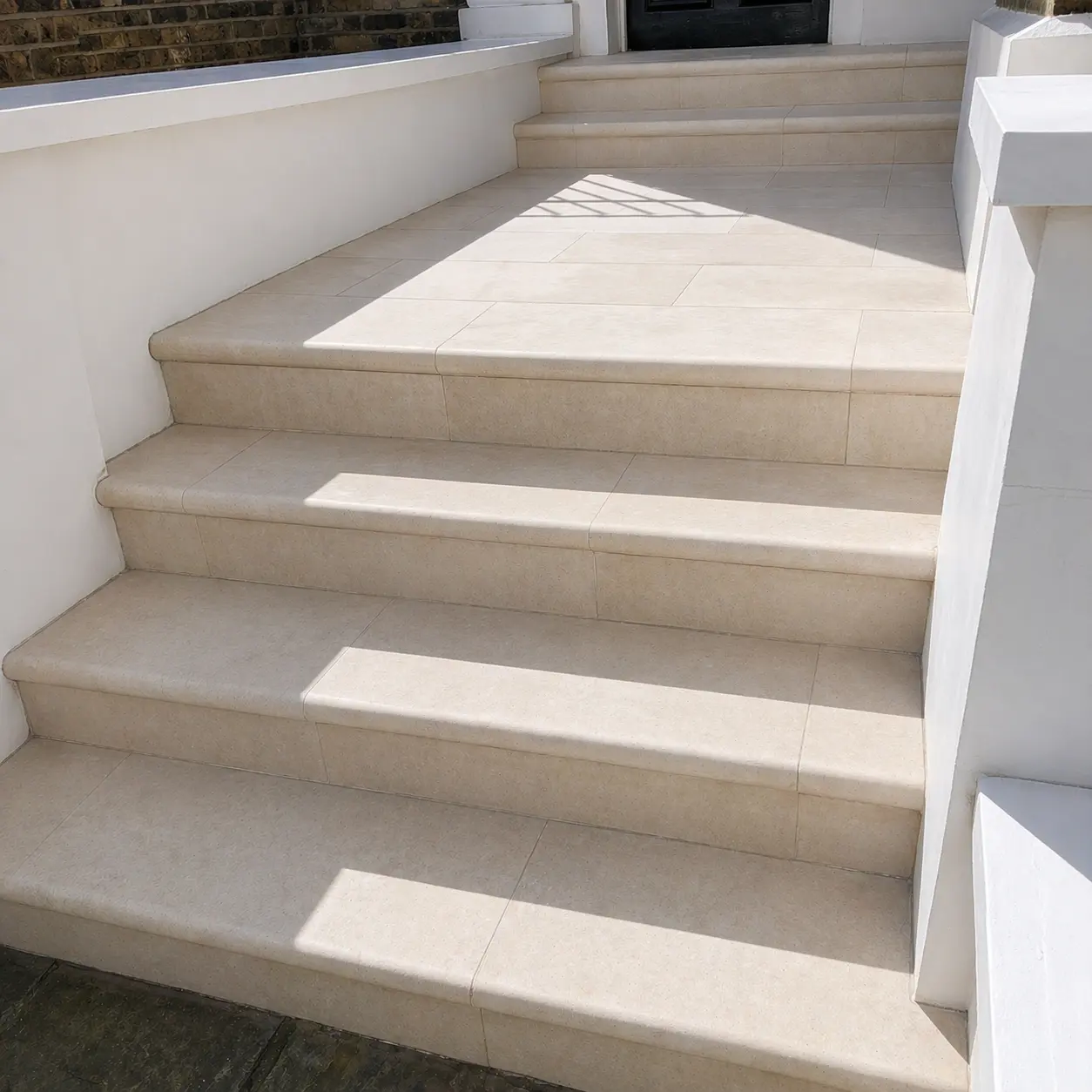
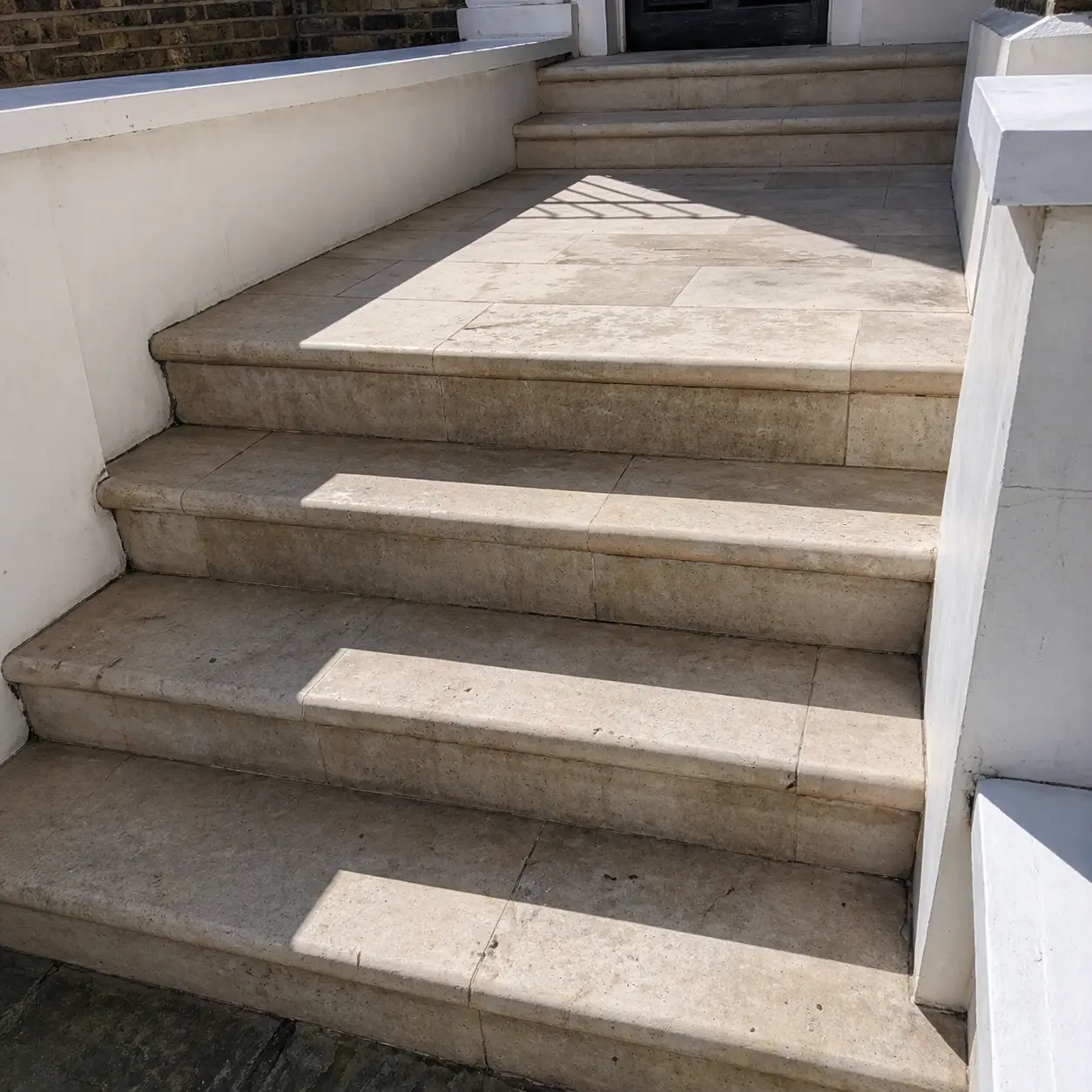
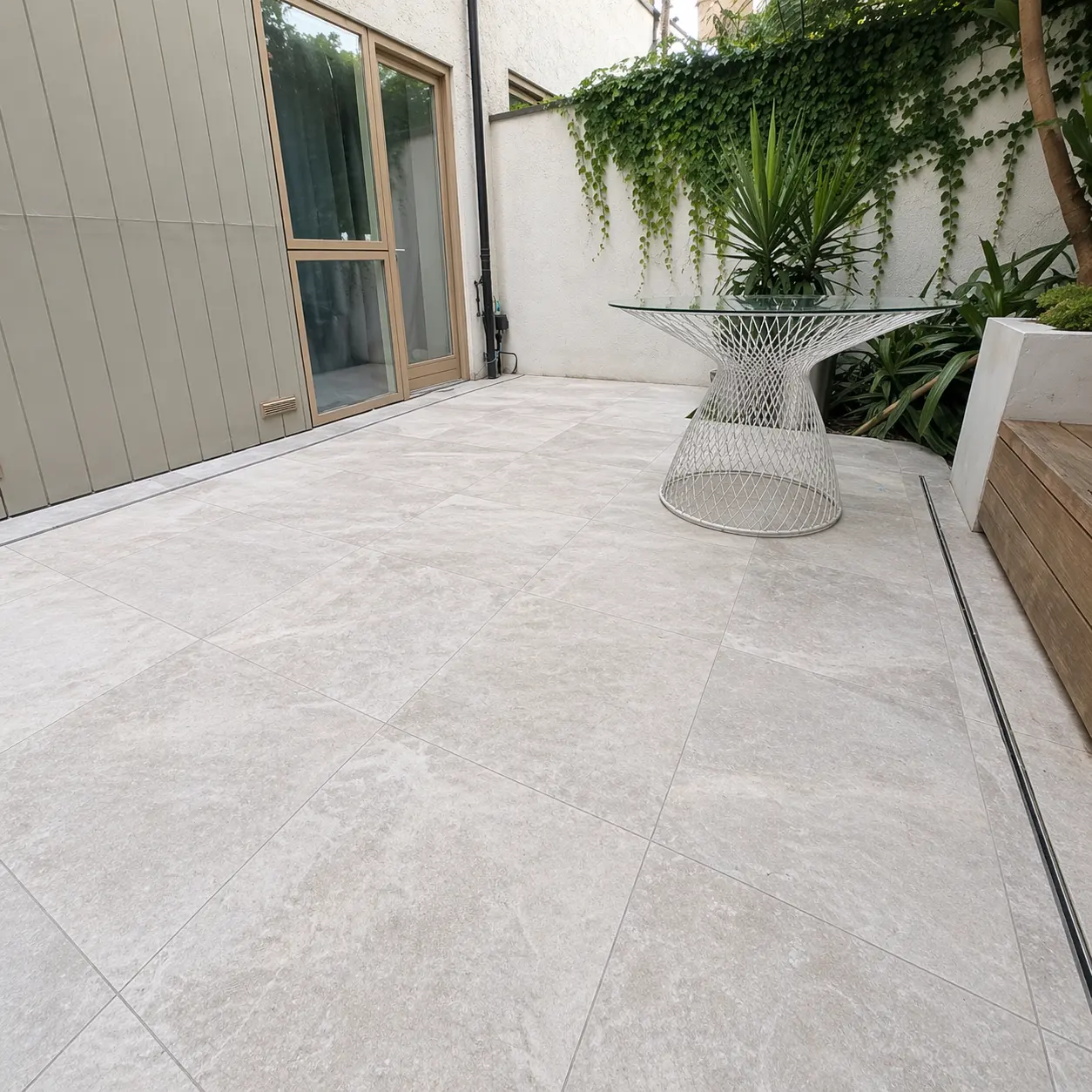
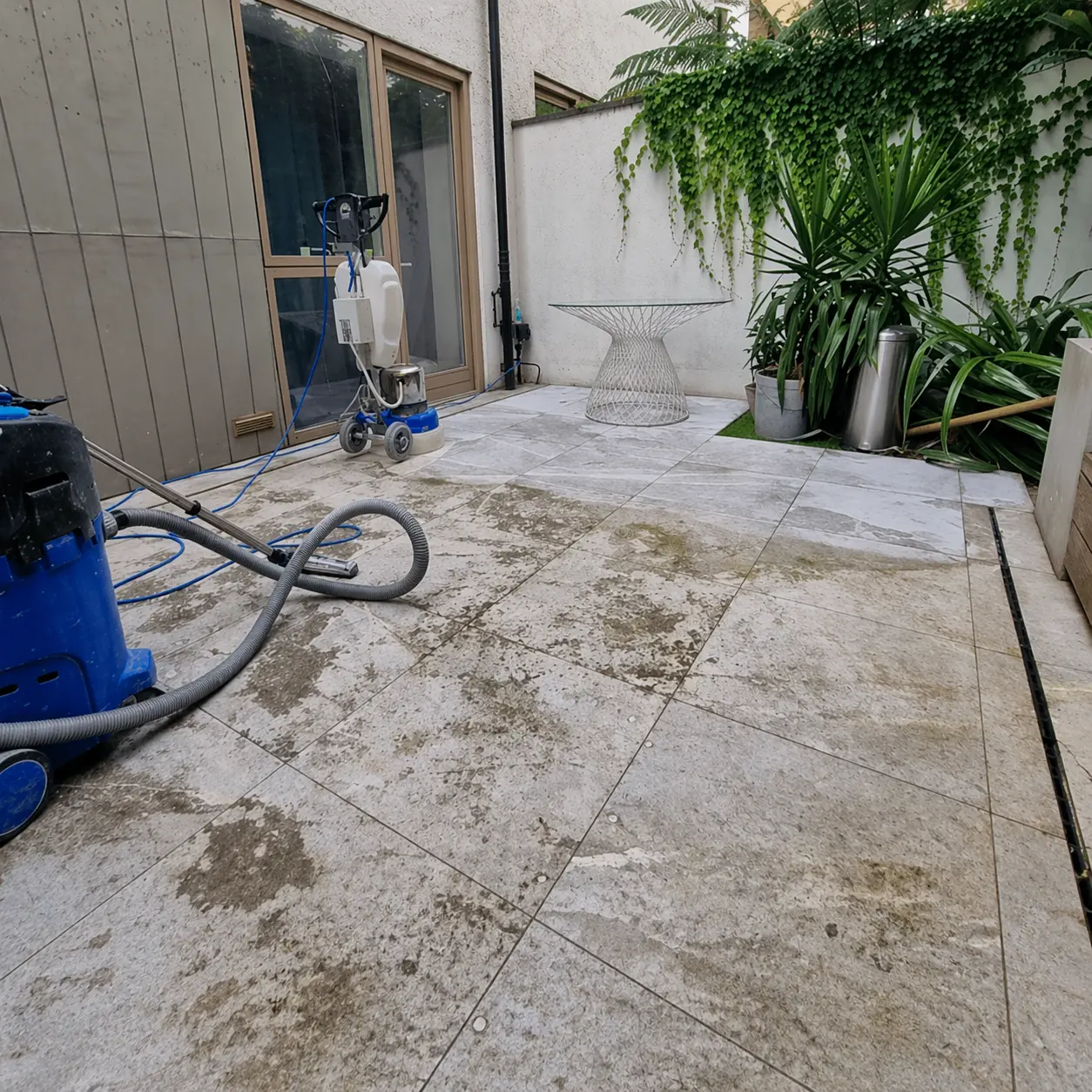
Why stone honing is needed
Honing is the finish most natural stone floors should actually have. A reflective polish is correct for a handful of specific settings (a Victorian marble entrance hall, a formal reception room, a Calacatta kitchen worktop), but for everyday living, wet areas and family-use floors, a matt or satin hone is easier to live with, safer underfoot, and more consistent with how most stones were originally specified. Honing also solves the two most common complaints on older limestone and travertine installations in London homes. Dulled traffic paths where the floor has worn unevenly, and acid etching where lemon, wine, shampoo or household cleaner has marked the surface. Both are removed by re-honing the surface to an even plane.
Left untreated, an etched or unevenly worn honed floor continues to deteriorate. The etched patches trap dirt differently to the surrounding stone, which makes cleaning look patchy and the problem look worse over time. Worn traffic paths develop into visible channels that are harder to correct the longer they are left. Honing caught early is a one-day intervention. Honing a floor left for a decade is a two to three day project with more grinding work at the start.
Signs your stone may need honing
- Dull patches where furniture has not sat, visible in raking daylight
- Etch marks that look like watermarks but do not wipe away
- Fingerprints and water rings that stay visible on a clean dry surface
- Mismatched appearance between high-traffic and low-traffic parts of the floor
- A wet area surface that feels slippery underfoot when wet
- A limestone or travertine floor that looks "tired" but has no specific damage you can name
- An older honed installation that was polished by a previous contractor and now has the wrong sheen for the room
Suitable stone types and settings
We hone travertine (patios, pool surrounds, kitchen floors, Roman-style bathrooms, feature walls), limestone (French Moleanos, Portland, Jerusalem Gold, Bath stone, honed British fossil), marble (where the client wants soft matt or satin rather than full mirror), sandstone (period flagstones, York stone, Purbeck paving), and slate (honed kitchen worktops, slate hearths, flagstone floors). Each stone has its own honing sequence. Travertine is typically run to 400 grit so the characteristic texture stays readable. French limestone goes higher, to 600 or 800, for a soft executive-home matt. Marble can sit anywhere from 200 grit matt in contemporary bathrooms to 800 grit soft satin in calmer reception rooms where a full polish would feel too heavy.
Honing is the correct method for wet area surfaces where a polished finish is dangerous underfoot. Honed limestone and honed travertine are both slip-tested in showers, pool surrounds and steam rooms, and will pass the R10 to R11 thresholds most residential and hospitality briefs require. We write a slip rating into the method statement where safety is relevant.
Results and expectations
A properly honed floor reads even, calm and material-true. The colour is clearer, the traffic paths are gone, the etch marks are gone, and the stone looks like itself again. Two caveats. First, honing removes a real fraction of stone thickness (more than polishing, less than grinding), so it is not something to do on a yearly cadence. A honed floor in normal residential use needs attention every seven to fifteen years, not sooner. Second, honing cannot correct missing stone. Chips, breakouts, deep gouges or broken tile edges need crack and chip repair before the honing stage, and close-range inspection will often still see the repair. After honing, we strongly recommend sealing and impregnation on porous stones to protect the freshly opened surface.
When to choose polishing instead of honing
If your installation was originally specified as polished (period marble hallways, Calacatta reception rooms, formal lobbies), or you actively want reflection and shine, stone polishing is the right brief. Honing will produce a beautiful calm finish on those stones too, but it will not return the original reflective character they were designed for. For most bathroom floors, wet rooms, family kitchens, patios and contemporary residential installations, a hone is the better call. When in doubt, we prepare a test patch at two different finish levels on an inconspicuous area so you can see both in your own light before committing.
Why choose us for stone honing
Honing rewards patience more than any other stage of restoration. A honing pass at 400 grit looks identical to a pass at 600 grit unless you know what to feel for and what to test for. Getting the finish level truly even across a hundred square metres of limestone, through every run and direction of the room, is the difference between a professional hone and a domestic one. Marius is on every honing job personally, we do not subcontract the honing stage, and every project includes a documented method statement, a test patch you sign off, and before-and-after moisture and slip readings where the setting calls for them. We are fully insured for residential, heritage and commercial work, and we are used to working alongside interior designers, architects and main contractors on sequenced programmes.
Areas we cover
Our honing work in London covers Mayfair, Kensington, Chelsea, Notting Hill, Holland Park, Belgravia, Hampstead, St John's Wood, Marylebone, Primrose Hill, Islington and the wider centre and north of the city, plus boutique hotels and private residences in the Home Counties. See areas we cover for the full list.
Pricing
Quoted after a site visit
Every quote is bespoke. We come out for a free 15-minute site visit, look at the stone, agree the finish with you in person, and send a written quote — usually the same day.
How we work
A careful, transparent process
- 01
Site assessment and finish agreement
We identify the stone, confirm the existing finish, and agree whether you want matt honed, light satin, or a soft honed-polish hybrid.
- 02
Protection and containment
Full dust and water containment, furniture relocated or protected, all adjacent surfaces masked.
- 03
Grinding (only if required)
Required where lippage or deep damage exists. Skipped on most honing projects.
- 04
Coarse honing
Diamond pads from 50 to 200 grit remove surface wear, scratches and etch marks across the full area at even pressure.
- 05
Mid honing
400 to 800 grit pads close the surface to the finish level agreed with you in advance.
- 06
Finish honing
Final pass to the agreed level, matt, light satin or soft honed sheen. No further polishing beyond that grit.
- 07
Impregnating sealer
Honed limestone, travertine and sandstone benefit hugely from a breathable impregnator. Marble is optional.
- 08
Written aftercare
Cleaners to avoid, re-seal cadence, slip rating where relevant, and photographed final condition on file.
Common questions
Frequently asked
-
How long does stone honing take?
A typical residential stone honing project is completed in one to three working days. A single bathroom or small hallway takes one day. A full ground-floor limestone hone is usually two to three days. Travertine patios and pool surrounds vary with weather, but most are completed in two days of dry conditions. Grinding adds a day where it is required. We confirm the programme in writing at the site visit so you can plan around the works.
-
How much does stone honing cost in London?
Stone honing starts at £75 per square metre, with a minimum project value of £850. A typical London bathroom hone is £850 to £1,200. A full ground-floor limestone hone on a London townhouse is usually £2,500 to £5,000 depending on square metreage and stone condition. Wet-area honing with slip testing is a small premium. Every quote is given in writing after a site visit.
-
What is the difference between honing and polishing?
Polishing produces a reflective mirror or high-satin finish. Honing produces a soft matt or light satin finish. Both use progressive diamond pads, but honing stops at a lower grit (typically 400 to 800) and polishing continues to 3000 grit or higher with finishing powders. Honing is the correct specification for most bathrooms, wet areas, family kitchens and contemporary stone installations. Polishing is correct for period entrance halls, formal reception rooms and showpiece worktops.
-
Is a honed finish safe for wet areas and pool surrounds?
Yes, and it is the correct specification for those settings. A honed limestone or travertine surface in a wet area typically achieves R10 to R11 slip ratings, which meet residential and most hospitality requirements. A fully polished finish in the same setting would be dangerous underfoot. We write slip performance into the method statement for any wet-area project and can specify a deeper matt hone where the setting demands a higher slip rating.
-
How long will a honed finish last?
In normal residential use, a properly honed stone floor holds its finish for seven to fifteen years before needing attention. Travertine patios and pool surrounds may need a refresh sooner (five to eight years) due to weather exposure. Kitchen floors and busy hallways sit in the middle of that range. We always recommend annual maintenance cleaning with the correct pH-neutral product, which extends the life of the finish significantly and delays the next full re-hone.
-
Do I need to seal the stone after honing?
On limestone, travertine, sandstone and slate, yes, sealing is essential after any honing work because the freshly opened surface is more absorbent than it was before. Marble is optional but recommended in bathroom and kitchen settings. We include the correct impregnating sealer as part of every honing project and give you a written re-seal schedule so the protection is maintained going forward.
Ready to talk?
Send us a photo of your stone honing
WhatsApp or upload a picture. You'll receive a thoughtful response within one working day and we'll only book a site visit if it's genuinely needed.
Prefer the phone? Call the specialist