Stone grinding and lippage removal is the heavy-duty levelling stage of a full stone floor restoration. It removes the visible height difference between adjacent tiles, flattens worn or poorly-laid installations, and corrects deep damage that cannot be polished or honed out. It is the correct treatment for period terrazzo hallways, uneven marble floors, large-format porcelain reception rooms with visible lippage, and limestone installations where decades of wear have left an uneven plane. We grind and flatten floors across London using full dust extraction and diamond metal-bond pads.
Recent work
Real before and after
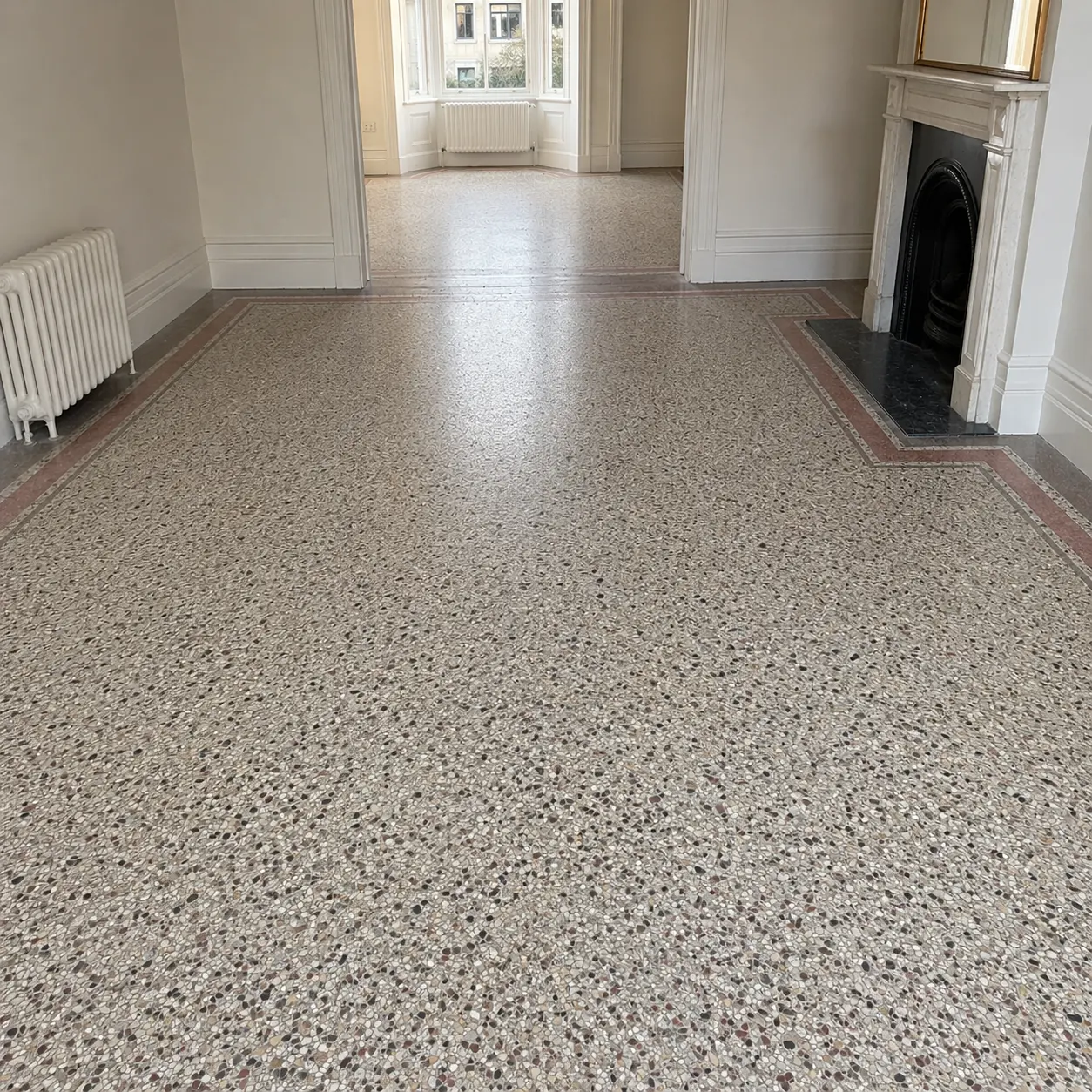
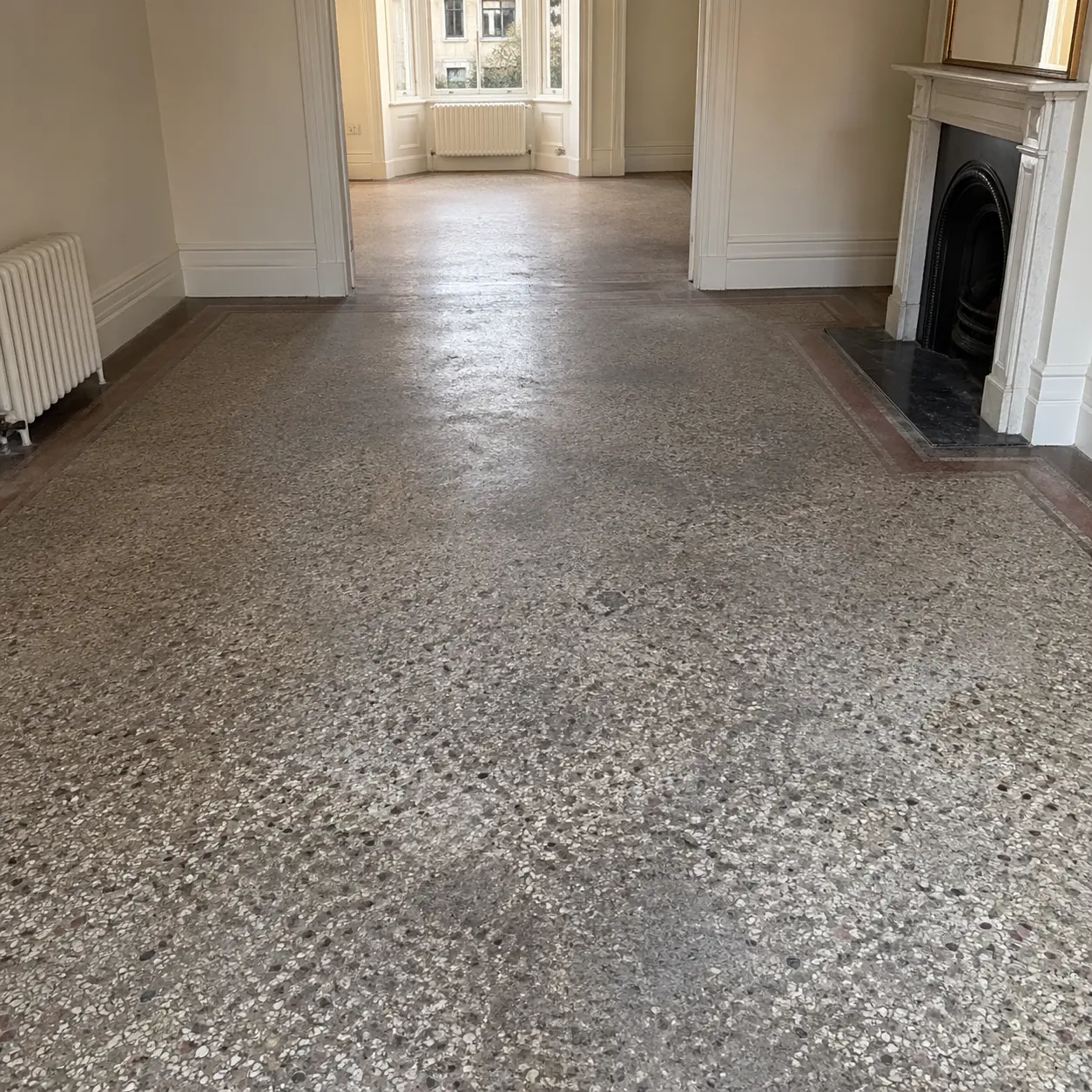
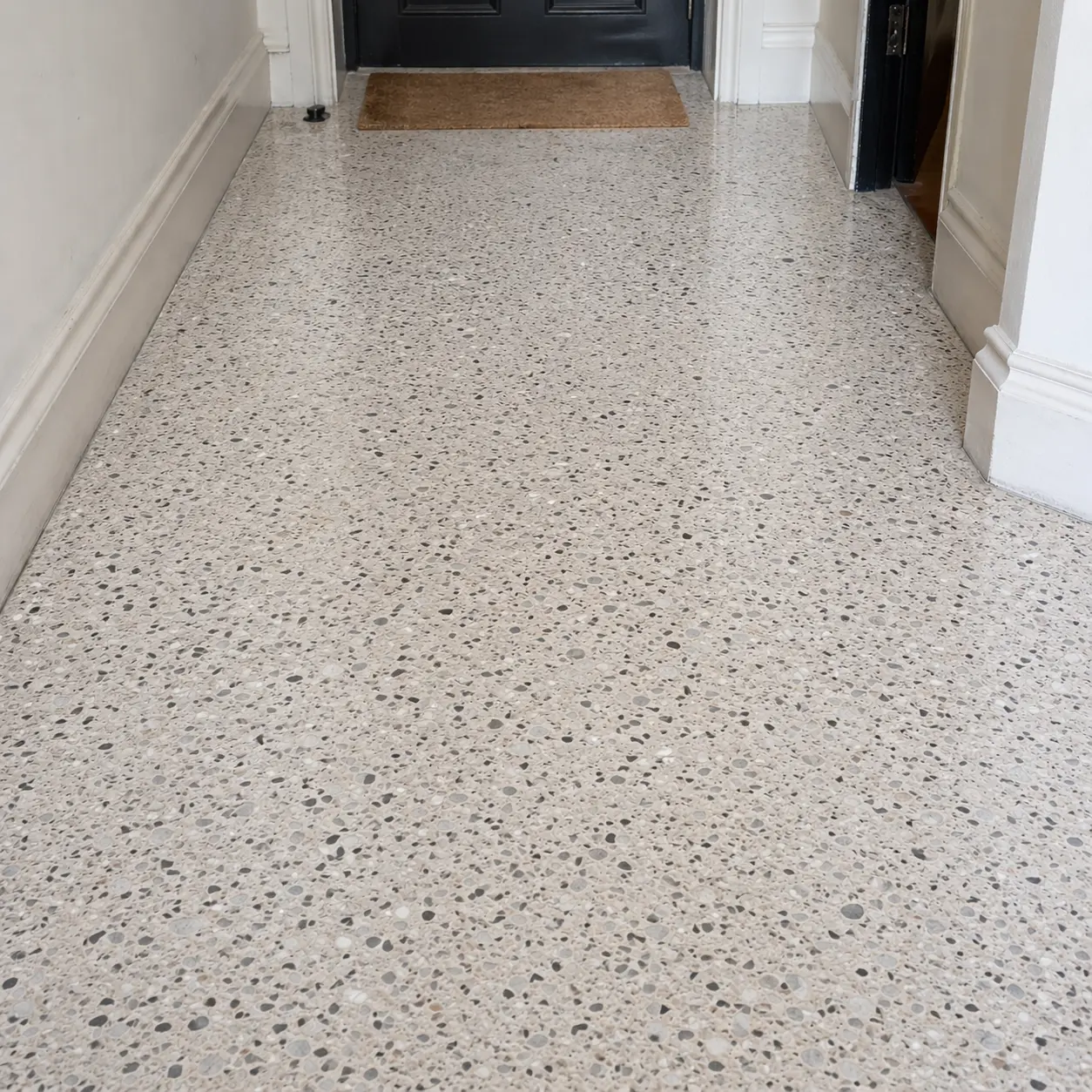
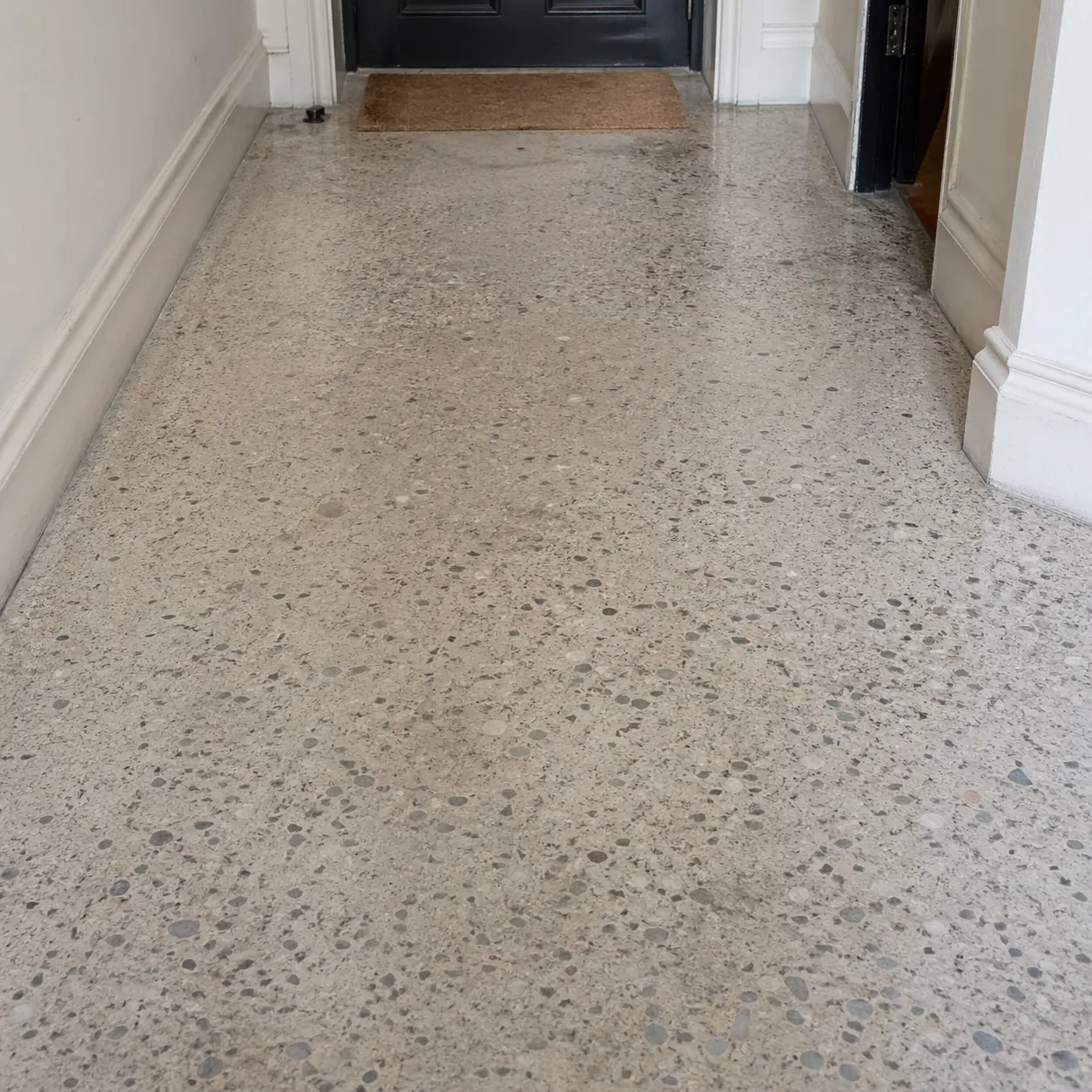
Why grinding and lippage removal is needed
Grinding is the stage nobody asks for on a quote but that plenty of London floors genuinely need. When tiles have been laid with visible height variation between them, walking across the floor feels uneven, cleaning cloths catch on the raised edges, and no polish, hone or deep clean will give a consistent finish until the high points are brought down to the plane of the surrounding tiles. That process is lippage removal, and it is done with metal-bond diamond grinding pads, working through a sequence that flattens the whole floor to a single even level.
The underlying cause of lippage is usually either a tile installation that never achieved a proper setting bed, a floor that has moved and settled over decades (common on period properties in London where ground conditions have shifted), or more recently the increasing use of large-format porcelain in new-build apartments, where the sheer tile size makes factory-tolerance variation visually obvious. Whatever the cause, the result is the same: a floor that trips the eye, collects dirt along every raised edge, and cannot be finished evenly without grinding. Left untreated, lippage also accelerates grout damage, because the raised tile edges take all the foot-traffic wear that the grout should share.
Signs your stone may need grinding
- You can feel raised edges between tiles when walking in socks or bare feet
- Dust and dirt visibly collect along the grout lines even after cleaning
- Raking light across the floor shows a clearly uneven surface, like small ridges
- Adjacent tiles reflect light at different angles
- Grout is cracking or failing along specific tile edges
- Large-format porcelain tiles (600mm and above) look visibly uneven at the joints
- A previous contractor has honed or polished the floor but the finish still looks patchy
- A period terrazzo installation has lost its flatness and the aggregate sits at different levels across the room
Suitable stone types and settings
We grind and level terrazzo (period Italian terrazzo almost always needs a grinding stage during restoration because the aggregate has settled over decades), marble (where tiles have lifted, shifted, or been badly installed), limestone (flagstone floors with uneven riven surfaces that the client wants flattened), large-format porcelain (increasingly common in new London kitchens and reception rooms, where lippage between 1200mm tiles is near-impossible to hone out), and granite (rare, because granite is too hard for quick grinding, but possible for specific damage). Sandstone and slate riven flagstones are not suitable candidates for grinding because their original texture is the point of the specification.
There is a limit to what grinding can do. Every tile has a finite thickness, and once the top four or five millimetres have been ground off, you are into the body of the stone where polishing response changes. We measure tile thickness at multiple points before quoting. If the lippage exceeds what grinding can safely remove, the honest answer is tile replacement, not grinding, and we will tell you that in writing before any work starts.
Results and expectations
A properly ground floor is flat, even, and visually calm for the first time since it was installed. The grout lines read as intentional detailing rather than as raised ridges. The finish that sits on top (honed or polished) is consistent across the whole room. Two honest caveats. First, grinding is a one-off intervention. It cannot be repeated many times on the same tiles without running out of stone. Second, grinding always flows into honing in the same visit. There is no point flattening a floor to 50 grit and leaving it, it will look worse than before. The sequence is always: grind flat, hone to close the surface, hone to final grit, seal.
When to choose a lighter service instead
If your floor is not genuinely uneven (no lippage you can feel, no raised grout edges), grinding is heavier than you need. Stone polishing or stone honing will correct dullness, etching and surface wear without touching the underlying plane of the floor. If the problem is appearance rather than flatness, deep cleaning is usually the correct first stage. Grinding is specifically for floors where the tiles themselves do not sit at the same level, and should not be used as a default restoration method on floors that do not need it.
Why choose us for stone grinding
Grinding is the highest-risk stage of stone restoration. Over-grind, and the tile is permanently thinned and compromised. Under-grind, and the lippage remains and the honing stage cannot finish evenly. The skill is in measuring before cutting, taking light passes across the whole floor rather than deep passes in one zone, and knowing when to stop. Marius is on every grinding job personally, we do not subcontract any part of the grinding stage, and full negative-pressure dust extraction is fitted on every grinding visit without exception. We document tile thickness before and after grinding on file. We are fully insured for residential, heritage and commercial work, and we routinely write method statements and programme paperwork suitable for main contractors, architects and conservation officers.
Areas we cover
Our grinding work in London covers Bloomsbury, Marylebone, Mayfair, Belgravia, Kensington, Chelsea, Islington, Holland Park and the wider centre of the city, plus new-build apartments in King's Cross, Paddington, Battersea and selected projects in the Home Counties. See areas we cover for the full list.
Pricing
Quoted after a site visit
Every quote is bespoke. We come out for a free 15-minute site visit, look at the stone, agree the finish with you in person, and send a written quote — usually the same day.
How we work
A careful, transparent process
- 01
Site assessment and lippage measurement
We measure lippage at multiple points, check tile thickness, and quote against the actual grinding depth required.
- 02
Structural check
Grinding can only remove a limited amount of material. We confirm tile thickness, substrate stability and underfloor heating (where present) before proceeding.
- 03
Full dust extraction and protection
Negative-pressure dust extraction installed, work zone sealed off, all adjacent finishes protected.
- 04
Rough grind, metal-bond diamond
30 to 50 grit metal-bond diamond pads remove material aggressively, flattening the surface to a single plane.
- 05
Medium grind
100 to 200 grit resin-bond diamond pads refine the ground surface and prepare for the honing stage.
- 06
Lippage inspection
Straight-edge and feeler-gauge inspection across the full area before honing begins. Documented.
- 07
Transition to honing
Grinding flows directly into honing with 400 to 800 grit pads, setting up the floor for the finish level you have chosen.
- 08
Final finish and seal
Finish grit as agreed (matt, satin or polish), followed by an appropriate impregnating sealer on porous stones.
Common questions
Frequently asked
-
How long does stone grinding take?
Grinding projects are typically two to five working days. Grinding itself is usually one to two days, followed by the honing stage that always flows from it (one to two more days), and the final sealing stage. A small period terrazzo hallway might be two days total. A large-format porcelain reception room with significant lippage could be four to five days. We programme the work in writing at the site visit.
-
How much does stone grinding cost in London?
Grinding starts at £95 per square metre with a minimum project value of £1,200. It is the highest unit price in our service range because of the depth of stone removed, the dust containment equipment required, and the time it takes to do it safely. A typical period terrazzo hallway with grinding and honing is £1,500 to £2,500. A full reception room with significant lippage is usually £3,500 to £7,000. We give every quote in writing after a site visit and tile thickness measurement.
-
Is grinding safe for every type of stone tile?
No. Every tile has a finite thickness, and once the top four or five millimetres have been ground off, the stone is compromised. Hard stones like granite are very slow to grind and rarely worth it. Riven slate and textured sandstone are not candidates because the original surface character is the point of the specification. Marble, limestone, terrazzo and large-format porcelain are all suitable, provided the tile thickness allows it. We always measure thickness at multiple points before quoting.
-
Will grinding produce dust in my home?
Grinding produces significant dust, which is why we install full negative-pressure extraction at the work zone on every grinding visit without exception. The dust is captured at source before it becomes airborne. The rest of the property is sealed off behind masking and doorway containment. In normal practice, you can remain elsewhere in the house during the grinding stage, though we recommend leaving the work zone and adjacent rooms empty for the duration. We always agree access and protection in advance.
-
How long do the results of grinding last?
Grinding is a one-off intervention rather than a regular maintenance treatment. Once the floor is flattened and honed, the result is effectively permanent for the life of the installation. Routine maintenance (cleaning, re-honing every seven to fifteen years, re-sealing) is much lighter work because the floor never needs to be ground again unless the substrate itself moves. We document tile thickness before and after grinding so any future maintenance is planned around the remaining stone.
-
Can grinding fix every uneven floor?
Not every one. If the tile installation itself is failing (loose tiles, broken bed, major substrate movement), grinding will not fix the root cause and we will tell you so at the site visit. In those cases the honest answer is to address the installation first, usually by lifting and re-laying affected tiles. Grinding is specifically for floors where the tiles are sound but sit at different levels. We are clear about this distinction before any quote is given.
Ready to talk?
Send us a photo of your stone grinding and lippage removal
WhatsApp or upload a picture. You'll receive a thoughtful response within one working day and we'll only book a site visit if it's genuinely needed.
Prefer the phone? Call the specialist